

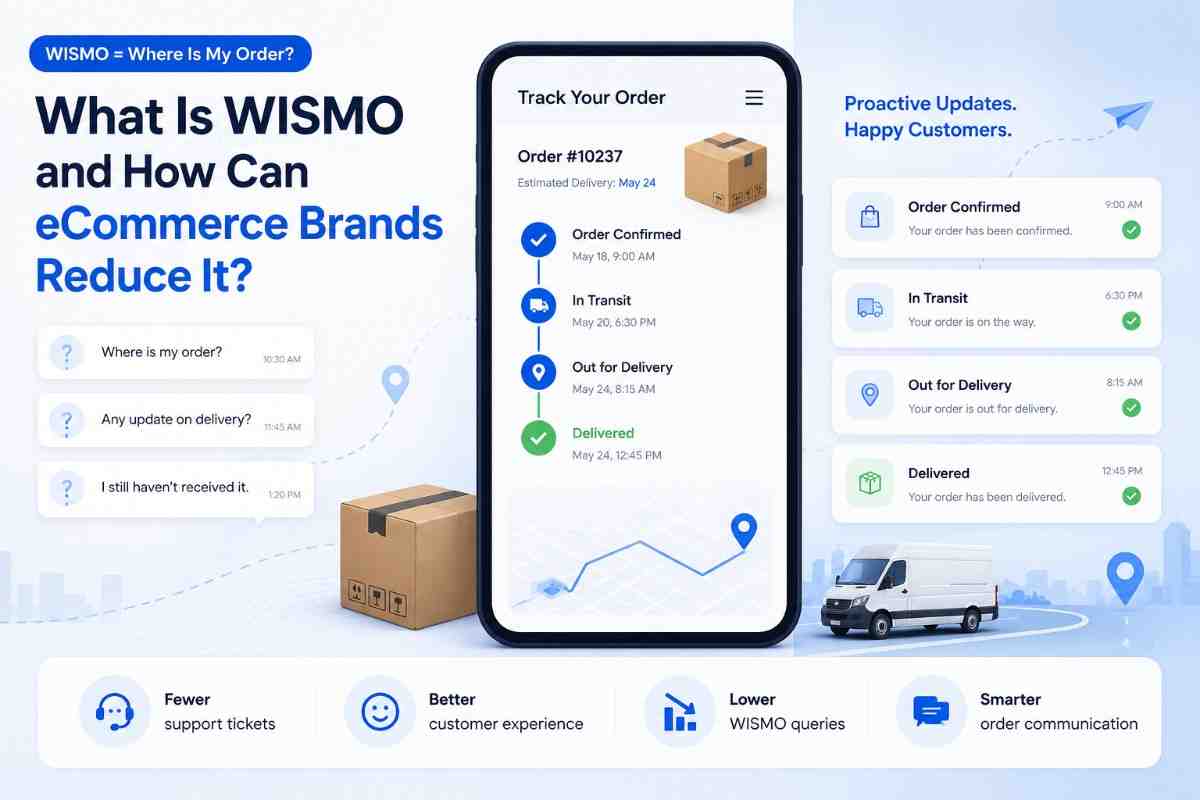
What is WISMO? It is a common eCommerce acronym for “Where Is My Order?” Brands use it to describe customer questions about an order’s location, dispatch status, expected delivery date, or delay.
These questions are not always caused by a courier delay. Customers may contact support because tracking information is missing, an order status has not changed, delivery estimates are unclear, or notifications were not sent at the right time. In each case, the customer is looking for confidence after payment.
A high volume of order-location queries creates avoidable work for support teams. Agents spend time checking courier portals, copying tracking updates, and explaining statuses that customers could have viewed themselves. The issue becomes more serious as order volume, courier count, delivery zones, and sales channels increase.
Reducing these queries requires more than adding a tracking link to an email. An eCommerce brand needs dependable shipment data, clear customer-facing updates, timely notifications, and an internal process for exceptions such as delays, failed delivery attempts, and returns. This guide explains the operational causes of these questions and the practical steps brands can take to reduce them.
WISMO stands for “Where Is My Order?” It refers to a customer service interaction in which a buyer asks for an update on an online purchase. The question may arrive through email, phone, chat, social media, or messaging apps.
The underlying need is usually simple: the customer wants to know whether the order has been confirmed, packed, shipped, delayed, out for delivery, delivered, or returned. The phrase can therefore describe both a customer query and a broader support metric used by eCommerce teams.
Not every order-status contact indicates a logistics failure. Some customers simply prefer confirmation. However, repeated queries often reveal gaps in the post-purchase experience. A useful analysis separates normal information requests from preventable problems such as missing events, unclear wording, delayed updates, or poor exception handling.
Order-status queries affect more than the support inbox. They connect the customer experience with fulfilment, courier operations, technology, and brand trust. When buyers cannot see what is happening, they often assume the order is delayed or the seller is not managing it properly.
For a support team, each query can require several manual checks. An agent may need to locate the order, identify the courier, open a separate tracking system, interpret a scan, and communicate the result. If the brand ships through multiple partners, the process becomes slower and more difficult to standardise.
Brands should measure this issue alongside delivery success rate, NDR volume, first-attempt delivery, cancellation, and return data. A fall in queries is useful only when it results from better visibility rather than customers giving up on support. The objective is to make reliable information available before the buyer needs to ask for it.
Reducing repetitive delivery questions is not about making it difficult for customers to contact a brand. It is about providing useful information at the point when uncertainty is most likely. A clear tracking journey helps customers self-serve while preserving human support for shipments that genuinely need intervention.
A branded tracking page can support this process by keeping the customer journey connected to the seller instead of sending every buyer to an unfamiliar courier website.
Brands can reduce order-location questions by improving the complete journey from order confirmation to delivery. The following process works best when the operations, technology, customer support, and fulfilment teams agree on ownership for each stage.
Real-time visibility is central to this workflow, but “real time” should mean that the displayed status reflects the latest available courier event. It does not mean that every parcel produces a continuous location signal. Communicating this limitation accurately helps prevent unrealistic expectations.
The strongest programmes combine accurate data with clear communication. A tracking system alone will not reduce contacts if customers receive contradictory messages or cannot understand the status shown on screen.
Courier terminology is often designed for operations teams, not buyers. Replace unexplained codes with plain-language messages. “Shipment picked up by courier” is clearer than an internal scan code. “Delivery could not be completed; please confirm your address or availability” is more useful than simply displaying “NDR.”
Customers need more than a historical event. Each important status should explain what happens next. For example, after pickup, the message can indicate that the parcel is moving through the courier network. After a failed attempt, it should explain how the customer can support a reattempt.
Email, SMS, WhatsApp, account pages, and support agents should not provide conflicting information. Use one source of shipment truth and define which event triggers each message. Avoid sending a delivery promise that is more precise than the available operational data supports.
A branded destination can include the store identity, order details, shipment progress, support instructions, and relevant product or service information. This keeps the customer engaged with the seller while still presenting the courier’s latest available event.
Brands should also review their tracking integration whenever they add a courier, sales channel, warehouse, or fulfilment workflow. New connections can introduce missing events or inconsistent status mapping if they are not tested before launch.
Not every period without a new scan requires manual intervention. Set practical rules based on service type, route, and courier norms. A shipment that exceeds the expected movement window, receives repeated failed attempts, or shows an address exception should enter an operational review queue.
Agents should know the difference between processing, picked up, in transit, out for delivery, delivered, delayed, and returned. Provide a short response framework that includes the latest event, the next action, and the escalation route. This creates consistent answers without forcing agents to write every reply from scratch.
Use real-time shipment tracking as an operational input, not only as a customer-facing page. Support and logistics teams can use the same information to prioritise investigations and contact customers proactively.
Many brands try to solve the problem by adding more messages. That can help only when the underlying information is accurate and useful. Poorly designed communication may increase confusion rather than reduce it.
The practical test is simple: ask a team member who did not process the shipment to locate the order and explain its current status. If that person cannot do it quickly, customers are likely to face the same friction.
The difference between the two approaches is not just the number of messages sent. It is the point at which the brand takes responsibility for information and exceptions.
Proactive communication does not eliminate delivery delays or guarantee that every shipment will update immediately. Its value is that customers receive accurate information sooner and the brand can intervene when an exception crosses its defined threshold.
Understanding what is WISMO helps eCommerce brands treat repetitive order-status questions as an operational signal rather than only a support burden. The most effective response is a connected post-purchase process with accurate shipment events, useful notifications, clear status language, and defined action for delivery exceptions.
Shipmozo can support this approach through Real-Time Shipment Tracking, Branded Tracking, multi-courier shipping, and workflows that help teams manage shipment visibility across delivery partners. These capabilities can make it easier for customers to find updates and for internal teams to focus on shipments that need attention.
Start Shipping Today
WISMO stands for “Where Is My Order?” It describes customer questions about an order’s shipment status, current location, expected delivery, delay, failed attempt, or return.
Customers usually ask because tracking information is missing, delayed, unclear, or difficult to access. They may also need to understand a delivery delay, a failed attempt, or the next expected step.
A brand can reduce them by connecting order and courier data, sending timely milestone notifications, providing one clear tracking destination, translating courier statuses into plain language, and reviewing delivery exceptions proactively.
No. Tracking software cannot remove every query because some customers need personalised help and some courier events may be delayed or unavailable. It can reduce avoidable questions by making the latest available information easier to find and understand.
A failed delivery attempt often leads customers to ask for an explanation or a new delivery date. Capturing the reason quickly and following a structured reattempt process can resolve the issue before it becomes a return to origin.


Neha Pant works in business development at Shipmozo, where she focuses on helping eCommerce and D2C brands simplify their logistics and scale operations efficiently. She is passionate about understanding real shipping challenges and connecting businesses with the right solutions.





.webp)