

Your Customer is Watching — Are You?
Your customer placed an order 3 days ago. They've checked their inbox twice, refreshed your website four times, and are now one unanswered message away from leaving a 1-star review.
This is the reality of eCommerce in India today.
In 2026, customers don't just want fast delivery — they want to know exactly where their order is, at every moment. And if you can't tell them, your competitor will.
This guide gives you everything you need to know about real-time shipment tracking—what it is, how it works, why it matters, and how Shipmozo makes it effortless for every eCommerce seller.
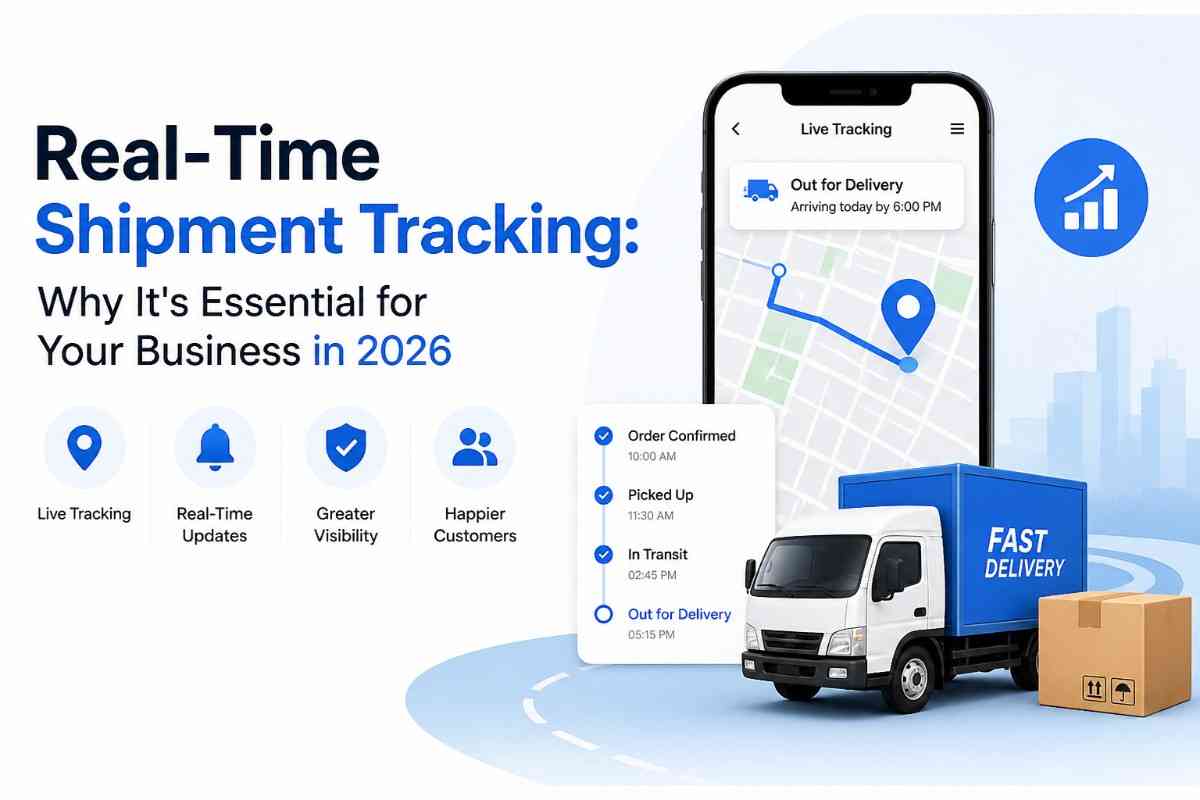
Real-time shipment tracking is the continuous, live monitoring of a shipment's location and delivery status — from the moment it's picked up at the seller's warehouse to the moment it reaches the customer's door.
Unlike traditional tracking that only shows fixed checkpoints like "Picked Up" or "Out for Delivery," real-time tracking gives a constant, live stream of location and status data at every point in between.
Real-time tracking means you — and your customer — always know exactly where the parcel is, what's happening with it, and when it will arrive. No guessing. No waiting. No "Where is my order?" calls.
In 2026, real-time tracking isn't just a feature — it's a baseline expectation. Consider these numbers:
These numbers tell a clear story: your customers are watching. And if your logistics operation can't provide live visibility, your competitors who can will take your customers.
Supply chains in 2026 stretch across cities, states, and international borders. Even a single unexpected disruption — bad weather, a road closure, a customs delay — can cascade into late deliveries and unhappy customers. Real-time tracking gives businesses the power to see these disruptions as they develop, not after the damage is done.
WISMO = "Where Is My Order?"
It is the most common customer support query in eCommerce—accounting for 21% of all support tickets. Every WISMO call costs you:
Real-time tracking eliminates WISMO by proactively telling the customer where their order is—before they even think to ask.
This is the most important distinction every eCommerce seller must understand:
The shift from traditional to real-time tracking = the shift from reactive logistics to proactive logistics.
Devices on delivery vehicles or embedded in shipment labels transmit live location data via GPS, cellular networks, and WiFi—giving precise, continuous location updates at every point in the journey.
The tracking platform connects to multiple courier APIs simultaneously—pulling status updates from all courier partners into one central feed. No need to switch between courier websites.
The platform's AI engine analyzes the incoming data, calculates predictive delivery ETAs, detects anomalies (delays, route changes, failed attempts), and triggers automated alerts instantly.
When a key event happens—pickup, hub arrival, out for delivery, or failed attempt—automated WhatsApp, SMS, and email alerts go to the customer. The seller gets exception alerts for shipments that need action.
The customer tracks their order on a fully branded tracking page — not the courier's generic website. Your logo, your colors, your brand experience throughout the post-purchase journey.
Monitor every shipment across all courier partners from one unified dashboard. No blind spots. No switching tabs. Full control from pickup to delivery.
Proactive status notifications cut "Where Is My Order?" queries by up to 40%. Your support team focuses on high-value tasks—not manual shipment chasing.
Real-time tracking detects delays, route exceptions, and failed delivery attempts as they happen — not after the customer calls. You can reach out proactively, set expectations, and protect the relationship.
Customers who receive proactive tracking updates report:
Tracking data reveals which couriers perform best by zone, which routes have the most delays, and where your RTO rate is highest. Data you can act on — not just dashboards to look at.
Fewer failed deliveries + less manual follow-up + smarter courier selection = directly lower logistics cost per order.
Managing live tracking across 27+ courier partners manually is impossible at scale. Shipmozo solves this completely:
All your shipments — across all couriers — are visible in one place. Delhivery, BlueDart, DTDC, Xpressbees, Shadowfax, Ekart, and 20+ more. One login. Full visibility. No tab switching.
Shipmozo automatically sends real-time delivery updates to your customers at every key milestone—pickup, in transit, out for delivery, delivered, or failed attempt. Zero manual effort. Buyers stay informed without contacting support.
Every "Track My Order" click lands on your branded page — not the courier's generic website. Add your logo, brand colors, banners, and product recommendations. Turn every delivery update into a brand touchpoint and repeat purchase opportunity.
shipmozo's AI engine predicts accurate delivery ETAs based on real-time courier performance data — not just standard SLAs. Customers get realistic timelines, not false promises.
When a shipment is delayed, stuck at a hub, or a delivery attempt fails, Shipmozo detects it instantly and alerts your team before the customer calls. You stay ahead of problems, not behind them.
When a delivery fails, Shipmozo automatically triggers NDR workflows—WhatsApp follow-ups, IVR calls, and SMS rescheduling—to recover the order before it becomes a costly return. Sellers using ShipMonzo see a 30–45% RTO reduction.
Every delivered shipment has an instant ePOD available — receiver name, signature, and timestamp. Your strongest evidence in any delivery dispute. Accessible directly from your dashboard.
Track which couriers deliver on time, which zones have the highest RTO rates, and which shipments need attention — all in one analytics dashboard. Make data-driven courier decisions, not gut calls.
Shipmozo integrates with Shopify, WooCommerce, Magento, Amazon, Flipkart, Meesho, and 100+ sales channels—automatically syncing orders and tracking data without any manual work.
Before choosing a tracking platform, evaluate it on these 6 parameters:
Multi-courier support—Does it integrate with all your courier partners in one place?
Proactive exception alerts—Does it detect and notify delays automatically before the customer calls?
Branded tracking portal — Does it show your brand, not the courier's generic page?
Automated customer notifications — WhatsApp, SMS, and email alerts at every milestone?
Analytics & performance data — Can you see courier-wise delivery success rates and RTO patterns?
Integration with your sales channels—Shopify, WooCommerce, Amazon, and Flipkart compatibility?
Shipmozo checks all six—built specifically for Indian eCommerce sellers shipping at scale.
In 2026, every delayed shipment that goes unnoticed is a customer complaint. Every unanswered "Where is my order?" is a lost repeat buyer. And every proactive update you send is a trust deposit that compounds over time.
Businesses that invest in real-time tracking today are building the operational foundation to scale confidently — with happier customers, fewer support tickets, lower RTO rates, and a logistics operation that works for them, not against them.
Shipmozo gives you everything you need:
Ship smarter. Track better. Deliver more—with Shipmozo.
Real-time shipment tracking is the live, continuous monitoring of a parcel's location and delivery status — from pickup at the seller's warehouse to delivery at the customer's door. It gives both sellers and buyers instant updates at every stage without manually checking.
Enter your AWB number on the courier's tracking page or use a unified platform like Shipmozo—where all shipments across 27+ couriers are visible in one dashboard with live status updates sent automatically via WhatsApp and SMS.
Common reasons include hub congestion, long-distance ground routes, remote pin code delivery, bad weather, or high-volume periods like Diwali sales. Shipmozo detects these delays automatically and alerts your team before the customer complains.
WISMO means "Where Is My Order?" — accounting for 21% of all eCommerce support tickets. Real-time tracking solves it by sending automated proactive updates to customers at every key milestone so they never need to contact support.
A failed attempt triggers an NDR (Non-Delivery Report). Shipmozo automatically sends WhatsApp follow-ups, IVR calls, and SMS alerts to reschedule delivery—recovering the order before it becomes a costly RTO return.
Yes—if you use Shipmozo. It integrates with 27+ courier partners, including Delhivery, BlueDart, DTDC, Xpressbees, and Shadowfax—all tracked from one single dashboard in real time.
By detecting failed deliveries instantly and triggering automated reattempt workflows, real-time tracking recovers orders before they become returns. Shipmozo users see a 30–45% RTO reduction as a direct result.


Diveya Mehta is a marketing and content specialist with 3+ years of experience, currently working with Shipmozo. With 1 year of hands-on experience in logistics, she creates practical, insight-driven content focused on shipping, courier performance, and eCommerce growth.





.webp)