

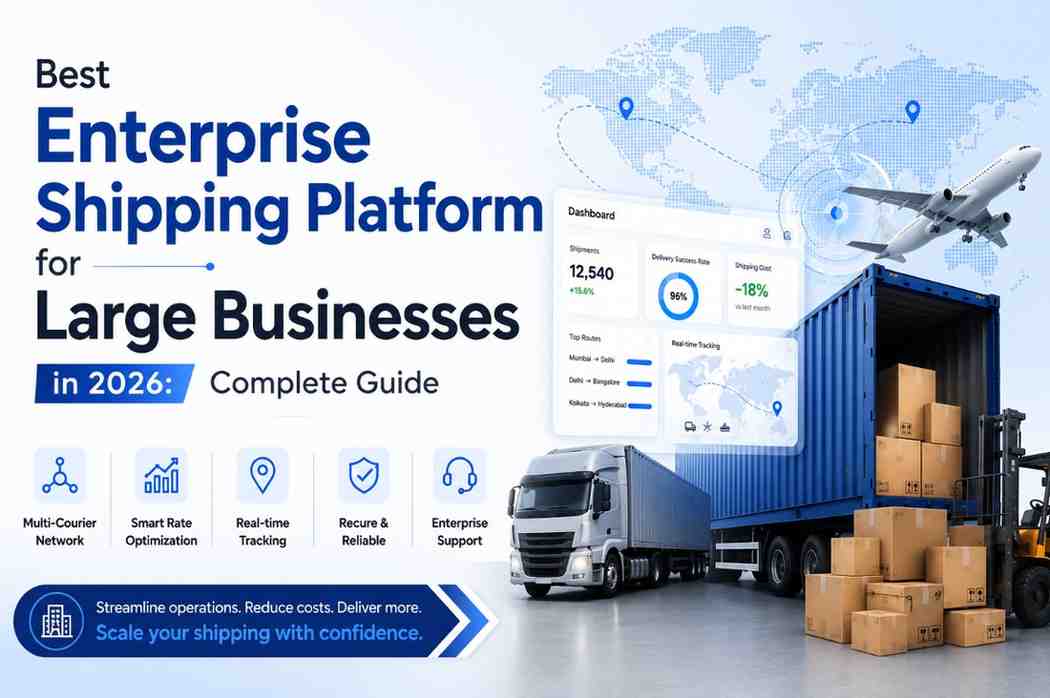
Running a large business means managing hundreds—sometimes thousands—of shipments every single day. A single missed delivery, a delayed COD reconciliation, or a broken courier integration can ripple across your entire operation, hurting customer trust and your bottom line. This is exactly why choosing the best enterprise shipping platform for large businesses isn't optional anymore—it's a core operational decision.
In this guide, we'll break down what an enterprise shipping platform actually does, the features that matter most at scale, and how to choose a solution that keeps pace with your growth.
An enterprise shipping platform is logistics software built to handle high-volume, complex shipping operations for large businesses. Unlike basic shipping tools designed for small sellers, enterprise-grade shipping software supports bulk order processing, multiple courier partners, advanced automation, and deep integrations with your existing systems (ERP, CRM, or e-commerce platforms).
If your business ships in bulk, operates across regions, or needs real-time visibility into thousands of orders, a dedicated enterprise shipping software solution becomes essential—not a nice-to-have.
A strong multi-carrier shipping platform lets you compare rates, delivery times, and serviceability across multiple couriers from a single dashboard—so you're never locked into one partner or stuck during peak-season capacity crunches.
Shipping automation for business at scale means your platform should auto-allocate couriers, auto-generate labels, and process bulk order shipping in a few clicks instead of manual, order-by-order handling.
Enterprise shippers need visibility—not just for customers, but internally. Real-time tracking dashboards and shipping analytics help you spot delays before they become complaints.
Seamless API integration with your ERP, CMS, or marketplace listings (Shopify, WooCommerce, Amazon, etc.) ensures orders flow into your shipping system automatically, with zero manual data entry.
For businesses running cash-on-delivery at volume, automated COD shipping solutions and NDR management software are critical to avoid revenue leakage and reduce failed deliveries.
Your shipping platform should scale with you—handling festive-season spikes or sudden order surges without breaking down.
Among the growing list of logistics platforms for businesses, Shipmozo has positioned itself as a strong option for enterprises looking for a reliable enterprise logistics partner.
Shipmozo offers a wide multi-courier network, giving large businesses flexibility and redundancy instead of dependency on a single carrier. Its real-time tracking dashboard gives full visibility into shipment status across all active orders, while automated COD reconciliation and NDR management help reduce manual follow-ups and revenue loss from failed deliveries.
For businesses processing high shipment volumes, Shipmozo's bulk order processing and API integrations with major e-commerce platforms mean shipments can move from order confirmation to dispatch with minimal manual intervention—an important factor for any eCommerce shipping solutions strategy at enterprise scale.
Use this checklist when evaluating options:
Businesses that move to a dedicated courier aggregator platform typically see faster deliveries, lower RTO (Return to Origin) rates, better shipping cost control, and stronger customer retention driven by consistent delivery experiences.
Choosing the best enterprise shipping platform for large businesses comes down to scalability, automation, and courier flexibility. As order volumes grow, manual shipping processes simply can't keep up—and the cost of delays, failed deliveries, and poor visibility compounds quickly.
If you're evaluating enterprise shipping solutions, it's worth exploring Shipmozo's enterprise shipping capabilities to see how a multi-courier, automation-first platform can support your business at scale.
The best platform depends on your shipping volume, courier requirements, and integration needs. Enterprise sellers generally look for multi-carrier support, automation, real-time tracking, and strong COD/NDR management—features platforms like Shipmozo are built around.
By comparing rates across multiple couriers, automating bulk order allocation, and reducing RTO through better delivery tracking and NDR management, enterprise platforms help cut per-shipment costs at scale.
Yes. Most enterprise-grade shipping software offers API integrations with major e-commerce platforms and marketplaces, allowing orders to sync automatically without manual entry.
NDR (Non-Delivery Report) management refers to the process of tracking, following up on, and resolving failed delivery attempts. For large businesses, automated NDR handling significantly reduces lost sales and manual follow-up work.
Yes, most enterprise shipping platforms, including Shipmozo, offer COD shipping solutions with automated reconciliation to ensure accurate and timely COD remittance.
There's no fixed number, but having access to multiple courier partners (rather than just one or two) is important for redundancy, better pin code coverage, and rate flexibility—especially during peak seasons.
Basic shipping tools are built for low-volume sellers and offer limited automation. Enterprise shipping platforms are designed for high order volumes, offering bulk processing, deeper analytics, API integrations, and dedicated support.
Most platforms offer onboarding support and phased migration—running the new platform in parallel with your existing setup before fully transitioning, minimizing disruption to daily shipping operations.


Kuldeep Karki is a Digital Marketing Manager at Shipmozo, specializing in performance marketing, SEO, and growth strategy. With over 6+ years of experience in digital marketing, he has worked extensively on scaling B2B and eCommerce brands through data-driven campaigns across Meta Ads and Google Ads.





.webp)