

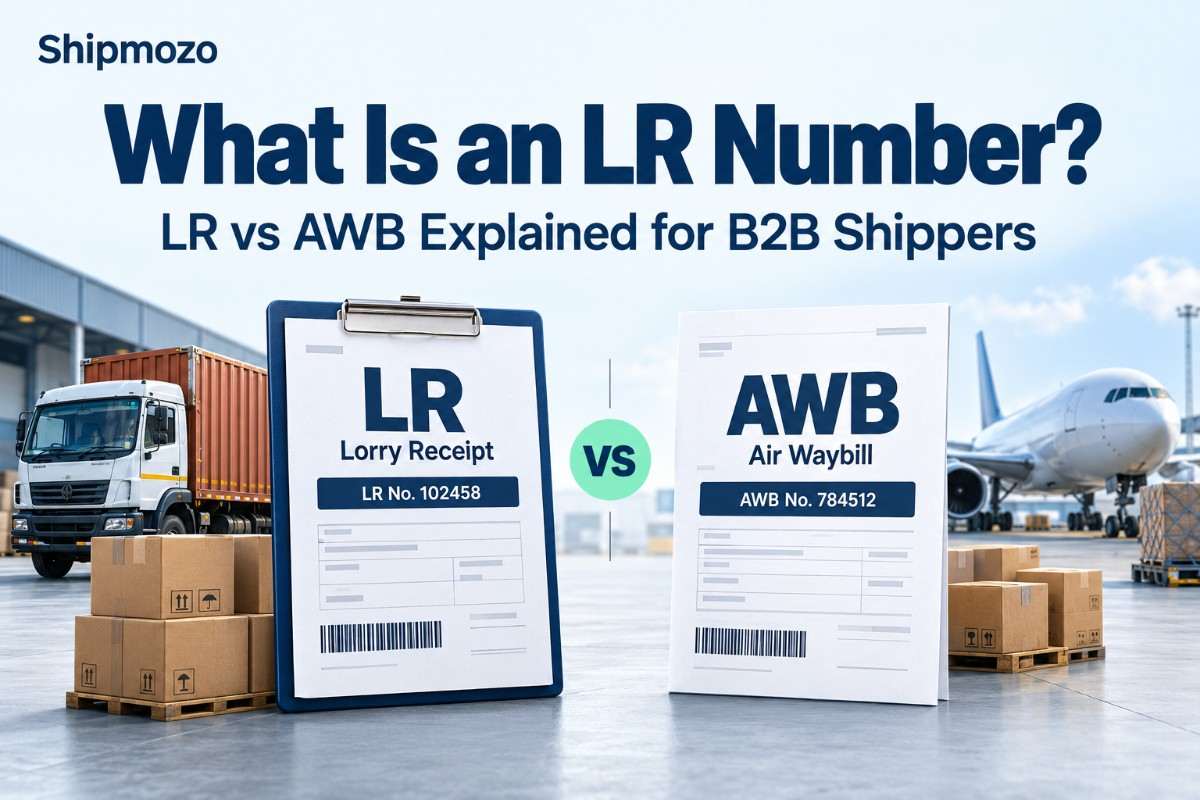
For businesses moving cartons, pallets, machinery, raw materials, or finished goods by road, the lr number meaning is closely tied to shipment control. An LR number is the reference assigned to a road freight consignment through a lorry receipt. It helps the transporter, shipper, consignee, warehouse, and accounts team identify and discuss the same movement.
In practical operations, teams often search for an LR number when checking dispatch records, following up on a delayed truck, matching freight invoices, or confirming that goods were handed over to a carrier. The number may appear on a physical document, a digital transport record, a freight invoice, or a shipment management system.
Many B2B shippers confuse an LR with an AWB because both documents identify shipments. They are not interchangeable. An LR generally relates to road transport, while an AWB is used for air freight. The document format, tracking process, liability terms, and operational use can also differ.
This guide explains the role of a lorry receipt, how LR numbers are used in transport, what information the document contains, and how it compares with an airway bill. It also covers practical checks that manufacturers, distributors, wholesalers, and B2B ecommerce sellers can use before and after dispatch.
An LR number is a unique reference assigned to a consignment accepted for transportation by road. LR commonly means Lorry Receipt. Depending on the transporter or region, the same document may also be called a consignment note, goods receipt, goods consignment note, or transport receipt.
The receipt confirms that the carrier has accepted specific goods from the consignor for delivery to a named consignee. It normally records the shipment details, origin, destination, package count, weight, vehicle information, freight terms, and the parties involved in the movement.
In simple terms, the number works like a file reference for a road shipment. If a supplier dispatches 40 cartons from Pune to a distributor in Bengaluru, the transporter may issue an LR containing a unique number. The shipper can then use that reference when asking about transit status, delivery scheduling, shortages, damage, or documentation.
A lorry receipt generally confirms three operational facts: the carrier received the stated goods, the goods were booked for a particular destination, and the movement is subject to the carrier’s transport terms. It is important evidence of handover, but it is not automatically proof that the goods reached the consignee.
Delivery confirmation usually comes through a separate proof of delivery document or electronic delivery record. The POD may include the receiver’s name, signature, stamp, date, time, remarks, or digital acceptance.
In many road freight operations, the terms are used for the same or substantially similar document. The exact name depends on the transport company, state, contract, and type of freight. Before relying on a document for a claim, payment release, or tax record, confirm the carrier’s terminology and the contractual requirements.
The LR number in transport is valuable because road freight often involves several handoffs and operational teams. A shipment can move from a supplier’s warehouse to a transporter’s hub, then to a regional branch, delivery vehicle, and consignee location. Without a consistent reference, locating the correct consignment becomes slow and error-prone.
For a B2B shipper, the reference connects the physical load with commercial and administrative records. It can be matched with a purchase order, sales invoice, e-way bill, packing list, vehicle number, freight bill, and delivery acknowledgement. This linkage matters when one dispatch contains multiple product lines or when several consignments travel on similar routes.
The LR does not remove the need for good master data. An incorrect consignee address, missing phone number, wrong package count, or inaccurate weight can still create delays even when the reference is valid. The number is an identifier, not a substitute for accurate shipping documentation.
For companies managing multiple modes, it also helps to separate transport references by mode. A road consignment should not be tracked using an air shipment number, and an internal order ID should not be assumed to be the carrier’s LR reference.
A properly issued lorry receipt supports control across the shipment lifecycle. Its value is greatest when the information on the document matches the goods physically handed over and the records maintained in the shipper’s order or transport system.
The receipt records that the carrier accepted the consignment. This is useful when responsibility changes from the shipper’s warehouse team to the transport provider. If cartons are later reported short or damaged, the handover record provides a starting point for checking package count, condition remarks, and loading procedures.
A unique reference gives the transporter a direct way to find the shipment. A query supported by the LR number is usually more precise than a message containing only the consignee name and approximate dispatch date. This is particularly useful when a business sends frequent loads to the same customer.
Logistics teams can use the document to compare booked weight, actual weight, freight terms, and delivery charges. If a carrier invoice includes an unexpected adjustment, the LR can be reviewed alongside weighment records and agreed tariffs.
Consignees can prepare their receiving desk or warehouse by sharing the reference with security and inward teams. The number can be checked against the transporter’s delivery paperwork before unloading, especially when multiple vehicles arrive during the same shift.
When a delivery dispute arises, the LR helps establish which consignment was involved and what was declared at booking. It should be reviewed with the packing list, dispatch photographs, seal details, vehicle information, and POD rather than treated as the only source of evidence.
When goods move by road before or after another transport mode, the LR provides a reference for the road leg. Keeping it connected to the order number, invoice, and other transport documents reduces confusion during transfers between road, air, rail, or warehouse operations.
The exact layout varies between transporters, but the workflow below applies to most B2B road consignments. A shipper should verify the document before the vehicle leaves the origin location, not only after a delivery problem occurs.
For larger operations, the process should be supported by a central logistics workflow. A B2B shipping process can connect order details, dispatch documentation, carrier allocation, and delivery records so that teams do not depend on isolated spreadsheets.
Good LR management is less about storing a number and more about preserving the complete chain of evidence around a road shipment. The following practices are useful for manufacturers, distributors, wholesalers, and other businesses handling repeat dispatches.
Businesses that use several carriers can also benefit from multi-courier shipping workflows. The aim is not simply to collect more tracking numbers, but to give operations teams a consistent way to create, monitor, and close shipments across transport partners.
Most LR-related problems are process failures rather than problems with the number itself. They occur when teams treat the reference as an informal note instead of part of the shipment record.
Where a shipment is delayed or an exception is raised, a structured delivery documentation process helps preserve the evidence needed by logistics, finance, customer service, and the carrier.
The main difference in lr vs awb is the transport mode and document system involved. An LR, or lorry receipt, is generally used for road freight. An AWB, or airway bill, is used for air cargo. Both identify a shipment and support tracking, but their operational context is different.
An AWB is not simply a faster version of an LR. It belongs to a different transport chain, with different handling points, schedules, charges, and documentation. You can learn more through this AWB number guide.
In multimodal logistics, one order may have both references. For example, goods may travel by truck to an airport, move by air, and then travel by road to the consignee. In that case, the LR identifies the road leg and the AWB identifies the air leg. The internal order or shipment ID should connect both without replacing either carrier reference.
The lr number meaning is straightforward: it is the unique reference associated with a road freight consignment recorded in a lorry receipt. It helps businesses identify the shipment, verify handover, follow up with the transporter, reconcile freight charges, investigate exceptions, and connect dispatch records with delivery proof.
For B2B shippers, accurate LR handling becomes more important as shipment volume, destinations, carriers, and product complexity increase. Keep the LR linked with the order, invoice, packing list, weight, vehicle details, and POD. Also remember that an LR and an AWB serve different transport modes and should not be used interchangeably.
Shipmozo supports business shipping requirements across B2B Logistics, Surface, Air, and Rail services, helping shippers manage transport choices as their distribution needs change. Start Shipping Today
An LR number is the unique reference assigned to a road freight consignment in a lorry receipt. It helps the shipper, transporter, consignee, and internal teams identify and manage the same shipment.
In many road transport operations, a lorry receipt and a consignment note refer to the same or substantially similar document. Terminology can vary by transporter, contract, or region, so confirm the carrier’s exact document requirements.
No. An LR number normally identifies a road freight movement, while an AWB number identifies an air cargo movement. They belong to different transport modes and document systems.
No. An LR generally confirms that the carrier accepted the goods for transport. Delivery should be confirmed through a POD, signed delivery receipt, or equivalent electronic receiving record.
A lorry receipt commonly includes the LR reference, consignor, consignee, origin, destination, package count, weight, goods description, vehicle details, booking date, freight terms, and applicable handling or condition remarks.
Yes. A multimodal shipment may have an LR for its road leg and an AWB for its air leg. Both references should be linked to the same internal order or shipment record without treating them as interchangeable.


Neha Pant works in business development at Shipmozo, where she focuses on helping eCommerce and D2C brands simplify their logistics and scale operations efficiently. She is passionate about understanding real shipping challenges and connecting businesses with the right solutions.