

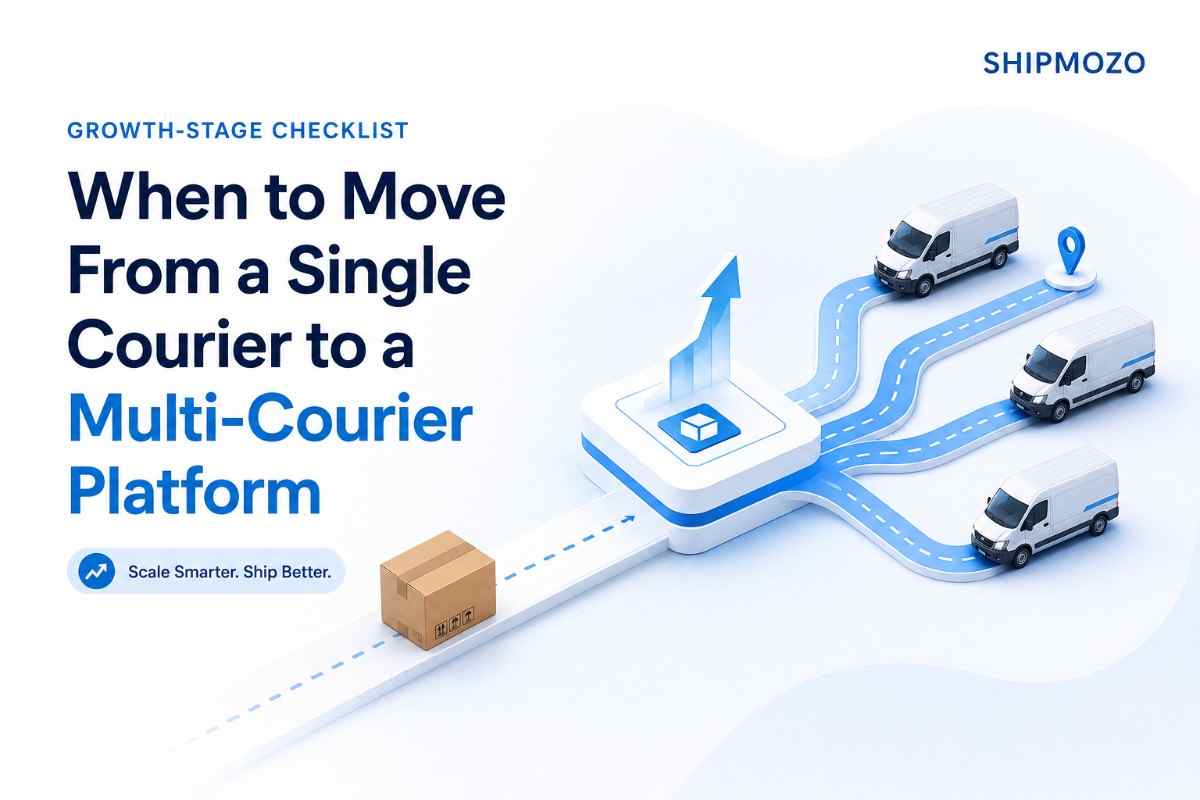
The trigger is not simply a higher shipment count. A brand may need a broader delivery network because it is entering Tier 2 and Tier 3 cities, adding cash-on-delivery orders, selling heavier products, or promising different delivery speeds. Serviceability gaps, delayed pickups, weak exception handling, and limited reporting often appear before the team formally decides to change its logistics model.
This guide explains the operational signals to monitor, the business benefits of using more than one carrier, and the steps required to make the transition without disrupting dispatch. It is written for D2C brands, ecommerce sellers, distributors, and manufacturers that are scaling rapidly and need a more flexible shipping operation.
A multi-courier platform connects a business with multiple delivery partners through a single logistics system. Instead of creating separate processes for booking, labels, tracking, billing, and shipment exceptions with each courier, the seller manages these activities through one operating layer.
The platform does not mean every order must be split manually between carriers. It allows the business to assign shipments according to practical conditions such as destination, pincode serviceability, package weight, shipping mode, delivery priority, and courier performance. The exact allocation method depends on the platform and the seller's operating rules.
For a growing brand, this model creates separation between the customer-facing store and the carrier network. The store can continue accepting orders while the logistics team chooses an appropriate delivery option for each shipment. This is particularly useful when the brand serves multiple regions or sells products with different handling requirements.
A single dashboard also gives the team a common view of shipment statuses. Pickup pending, in transit, out for delivery, delivered, delivery exception, and return movements can be monitored without checking multiple courier portals. Businesses comparing operating models can also review direct courier versus aggregation before making a decision.
Courier dependency becomes more visible as order volume and geographic reach expand. When one carrier experiences a service disruption, pickup delay, capacity issue, or destination-level limitation, the effect can spread across the entire dispatch operation. A second or third option provides operational flexibility, but only when it is managed through a consistent process.
Delivery performance also affects costs beyond the freight charge. Failed delivery attempts, customer support contacts, returns, reattempts, replacement shipments, and cash-flow delays can make an apparently low shipping rate less attractive. A courier selection decision should therefore consider the complete shipment lifecycle rather than only the initial booking price.
Scaling also increases the number of people involved in logistics. Founders may no longer supervise every shipment. Warehouse staff, customer support teams, finance personnel, and marketplace managers may all need access to accurate delivery information. A fragmented courier setup makes accountability difficult because each department sees a different part of the process.
Reviewing courier performance metrics gives the business a more objective basis for change. Compare delivery success, pickup adherence, exception frequency, return movement, dispute resolution, and remittance handling by destination and shipment type. The move should be based on recurring operational evidence, not on a single delayed parcel.
The main advantage of using several carriers is control. The business can match shipment requirements with available delivery capabilities instead of applying one carrier's network to every order. This does not automatically produce lower costs or faster delivery, but it creates the flexibility required to make better operating decisions.
Different carriers may have different strengths by region, pincode, shipment category, and delivery mode. A multi-carrier setup helps the seller continue dispatching orders when one partner cannot serve a destination. This is valuable for brands expanding beyond major cities, where delivery conditions can vary significantly between nearby locations.
Orders can be routed according to defined business rules rather than handled through ad hoc staff decisions. A lightweight parcel going to a well-served city may follow one route, while a heavier shipment or a remote destination may require another service option. Clear allocation rules reduce repeated manual comparisons.
Courier capacity can change during sale events, seasonal peaks, weather disruptions, regional restrictions, or network interruptions. Access to alternative partners gives the warehouse another dispatch path. The team can maintain continuity while investigating the original service problem.
One logistics view makes it easier for customer support to answer delivery questions and identify stalled shipments. A branded tracking page can also keep customers informed after checkout, although the quality of customer communication still depends on accurate status updates and internal follow-up.
Working with multiple delivery options allows the business to compare total shipment costs across lanes and package profiles. The relevant comparison should include freight, handling, reattempts, returns, weight disputes, and support effort. The lowest quoted rate is not always the lowest operational cost.
Moving to a multi-courier model should be treated as an operating process change, not just a software purchase. The following sequence helps a scaling business identify its needs, test the model, and expand it in a controlled manner.
Businesses using Shopify, WooCommerce, marketplaces, or multiple sales channels should also ensure that order data reaches the shipping workflow consistently. A relevant shipping integration guide can help teams think through order, courier, tracking, and COD dependencies before implementation.
Adding courier options creates value only when the business maintains clear rules and disciplined review. Without governance, teams can end up switching carriers randomly, losing visibility into performance, or choosing a low headline rate that produces higher downstream effort.
Track results by origin-destination lane, pincode group, product type, payment mode, and shipping mode. A carrier may be suitable for metro deliveries but less effective for remote routes, or reliable for prepaid parcels but less consistent for COD orders. Segmenting the data prevents broad conclusions from hiding important exceptions.
A low rate has no practical value if a courier cannot collect the package or deliver to the destination. Confirm pincode coverage, pickup availability, weight limits, product restrictions, and return capability before comparing prices. Serviceability should be a filter, not an afterthought.
Include booking, pickup, transit, first delivery attempt, successful delivery, NDR handling, return movement, and COD reconciliation in the review. This gives the team a more realistic view of operational performance. The RTO reduction process should be connected to address quality, customer confirmation, delivery attempts, and exception follow-up.
Every exception should have an owner, a next action, and a review deadline. Customer support may handle address confirmation, the warehouse may verify package details, and finance may resolve a billing or remittance issue. A shared process avoids situations where a shipment is visible but nobody is responsible for moving it forward.
Dimensions entered during order creation affect volumetric charges, while courier remeasurement can produce disputes after pickup. Use consistent packaging measurements, maintain evidence for disputed shipments, and review recurring differences by carrier or product category. This is especially important as the number of shipments increases.
Test allocation rules before major campaigns rather than waiting for capacity problems. Confirm warehouse cut-off times, pickup slots, packaging availability, customer communication templates, and escalation contacts. A backup courier is useful only if the team can activate it quickly and correctly.
Many growing businesses recognise the need for multiple courier options but implement the change without defining the operating model. The result is often more dashboards, more manual decisions, and unclear responsibility. Avoiding the following mistakes makes the transition more manageable.
Freight price is one input, not the complete cost of delivery. A lower rate may be offset by failed attempts, slow returns, weight disputes, poor tracking, or higher support volume. Compare carriers using the shipment outcomes that matter to your customers and finance team.
More options do not automatically mean better control. Each additional partner can introduce new rules, labels, escalation processes, billing formats, and service limitations. Begin with a practical set of carriers that covers the business's main gaps, then expand when the team can manage the added complexity.
Warehouse staff need clear instructions for carrier selection, label printing, packing, handover, and pickup reconciliation. If the process is confusing, parcels may be assigned incorrectly or remain uncollected. Conduct a shift-level trial so issues are found before a full rollout.
Forward delivery performance alone does not show whether the model is healthy. Failed attempts, customer unavailability, incorrect addresses, and return pickups affect margin and inventory availability. Include reverse logistics and NDR handling in regular courier reviews.
Support agents need access to the same tracking status and escalation rules as the logistics team. If they cannot explain a delay or request an appropriate reattempt, customers may receive inconsistent answers. Include support teams in pilot testing and document common exception responses.
Allocation rules and system workflows reduce repetitive work, but unusual shipments still require review. Oversized products, restricted locations, address anomalies, high-value orders, and urgent replacements may need a human decision. Keep an exception path instead of forcing every shipment through one rule.
Neither model is automatically correct for every business. The right choice depends on order volume, destination spread, product mix, serviceability, operational maturity, and the cost of delivery exceptions.
A scaling brand should also consider how quickly it can respond when demand changes. If new regions, products, channels, or delivery promises are being added, a flexible logistics layer may be more practical than repeatedly rebuilding direct courier processes. Reviewing how ecommerce businesses scale shipping can help connect courier decisions with broader fulfilment planning.
The right time to move beyond one courier is when delivery limitations begin affecting growth, customer experience, or team productivity. Recurring serviceability gaps, inconsistent regional performance, pickup delays, rising support queries, and weak exception visibility are strong signals that the current setup needs to evolve.
Use the multi courier platform checklist to review your shipment profile, define allocation rules, test a controlled rollout, and measure performance across the full delivery cycle. A well-managed model can give a growing business more choice without forcing the team to operate separate processes for every carrier.
Shipmozo supports scaling businesses with B2C Shipping, Surface, Air, and International Shipping services through its logistics aggregation platform. These options help businesses evaluate delivery requirements across domestic and cross-border movements as their customer base expands.
Start Shipping Today
A business should consider the change when it faces recurring serviceability gaps, pickup delays, inconsistent regional performance, rising delivery exceptions, or difficulty managing shipment information. Order volume alone is not the only trigger; geographic reach and operational complexity matter as well.
No. Multiple courier options create the ability to compare service and shipment costs, but savings are not automatic. The business should evaluate freight, reattempts, returns, weight disputes, customer support effort, and other delivery-related costs together.
Courier allocation can consider serviceability, destination, package weight and dimensions, shipping mode, delivery priority, payment method, and historical performance. Start with simple rules and review results by lane and shipment type before adding more complexity.
Test order flow, label generation, warehouse handover, pickup adherence, tracking visibility, delivery exceptions, return movement, customer support access, and billing accuracy. A pilot should cover representative destinations and product categories rather than only easy shipments.
Common mistakes include choosing only by price, adding too many carriers at once, ignoring warehouse training, failing to monitor returns and NDRs, excluding customer support, and assuming automation removes the need for exception oversight.


Diveya Mehta is a marketing and content specialist with 3+ years of experience, currently working with Shipmozo. With 1 year of hands-on experience in logistics, she creates practical, insight-driven content focused on shipping, courier performance, and eCommerce growth.





.webp)