

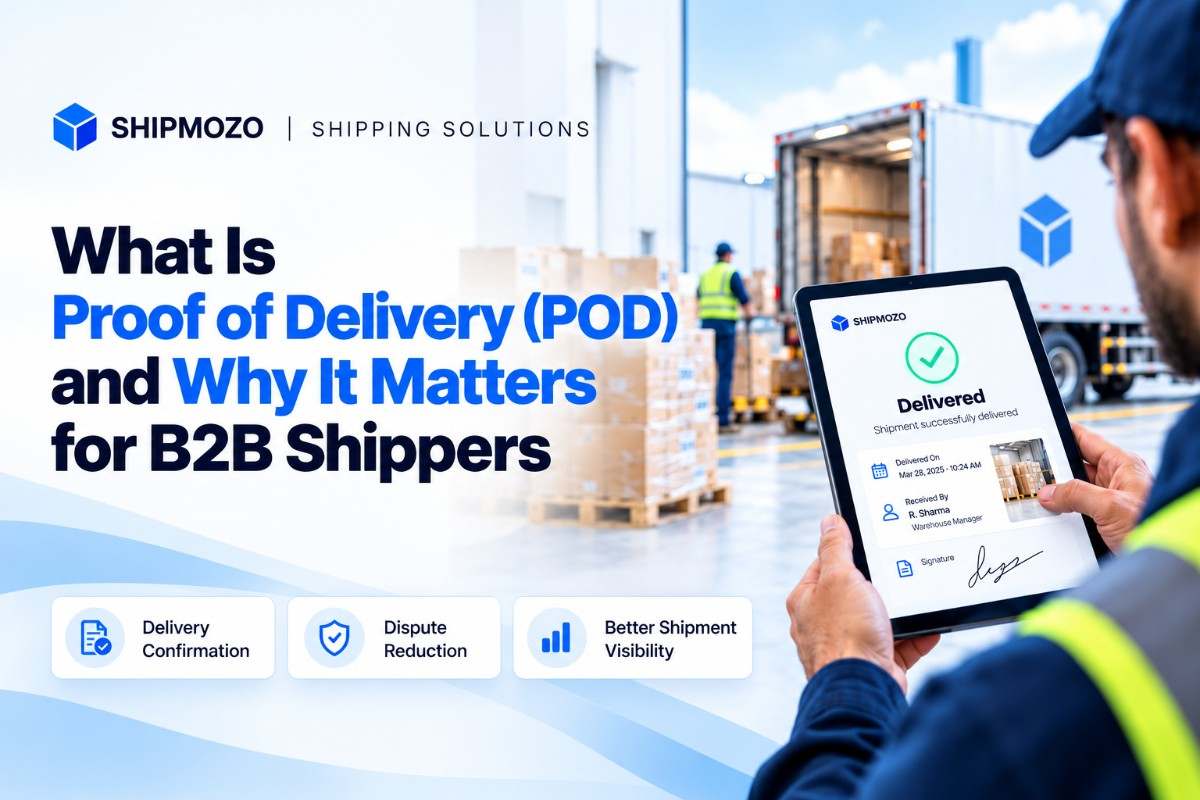
For B2B shippers, delivery is not complete simply because a carrier marks a shipment as delivered. The receiving business may need a signed document, digital confirmation, photograph, stamp, or recipient details before it accepts the transaction in its records. This evidence is commonly called proof of delivery, or POD.
So, what is proof of delivery in practical terms? It is a record that confirms a shipment reached the specified consignee or receiving location. The document connects the shipment, the carrier, the sender, and the recipient through delivery information that can be checked later.
POD is especially important for manufacturers, distributors, wholesalers, retailers, and other businesses that move inventory between warehouses, plants, offices, dealers, and commercial customers. A reliable record helps finance, sales, warehouse, customer service, and logistics teams work from the same information.
This guide explains the meaning of POD, the information it may contain, why it matters in B2B logistics, how the process works, and the mistakes that can weaken its value.
Proof of delivery is a physical or electronic confirmation that a carrier completed delivery to the intended recipient. It is generated after the shipment reaches the delivery point and is accepted, refused, or otherwise documented by the receiving party.
A POD can take different forms depending on the carrier, shipment type, customer process, and technology used. Traditional freight movements may use a signed delivery challan, consignment note, or transport receipt. Modern delivery operations may capture an electronic signature, recipient name, delivery timestamp, GPS location, delivery photograph, or scan of the receiving document.
A POD normally relates to a specific shipment reference, such as an AWB number, invoice number, consignment number, purchase order, or delivery order. These references make it easier to match the delivery confirmation with the original booking and the goods that were dispatched.
The exact format varies, but a useful delivery record commonly includes:
A POD is not the same as an invoice, a dispatch note, or an order confirmation. Those documents describe the commercial transaction or shipment preparation. The POD records the final handover.
B2B shipments often involve higher quantities, multiple stakeholders, scheduled receiving windows, and payment terms linked to successful delivery. A delivery dispute can therefore affect more than one order. It may delay invoicing, create reconciliation work, interrupt production, or strain a customer relationship.
Proof of delivery gives the shipper an auditable record of what happened at the destination. It does not remove every dispute, and it does not prove that every item was accepted without reservation if the document contains damage or shortage remarks. However, it provides a factual starting point for investigation.
Many B2B customers process invoices only after their receiving team confirms delivery. A properly captured POD helps the shipper demonstrate that the goods reached the agreed location. This can support invoice release, payment follow-up, and internal order closure, subject to the customer’s contract and acceptance terms.
If a customer says an order was not received, the operations team can check the delivery time, recipient, signature, photographs, and exception remarks. This is more reliable than relying only on a carrier status that says “delivered.” For a structured understanding of delivery exceptions, teams can also review how an NDR or non-delivery report differs from a completed delivery record.
Manufacturers and distributors may deliver to branches, dealers, project sites, warehouses, or job locations. A central POD process makes it easier to track which destination accepted which shipment. This becomes increasingly important when dispatches are split across several vehicles or delivered in stages.
A complete record helps identify where a delivery issue occurred. The problem may relate to incorrect consignee details, a missed receiving window, damaged packaging, short delivery, or incomplete handover documentation. Reviewing POD quality alongside carrier performance data helps logistics managers improve processes rather than treating every dispute as an isolated event.
POD management is more than document storage. It creates a link between physical movement and commercial control. When delivery confirmations are timely, readable, and matched to the right shipment, several teams can use the same evidence without repeatedly asking the carrier for updates.
The exact workflow depends on the mode, carrier, and customer requirements. A surface truckload delivery may use different documents from a parcel or air shipment, but the control points remain broadly similar.
A strong POD process starts before the vehicle reaches the destination. Most document problems are caused by incomplete shipment information, unclear customer instructions, or a lack of ownership after delivery. The following practices help B2B teams create records that are useful in real operational situations.
Not every consignee accepts the same format. One customer may require a company stamp, another may accept a digital signature, and a project site may require the receiver’s designation and delivery photograph. Document these requirements in the customer’s shipping instructions and communicate them to the carrier.
Keep the same order number, invoice number, purchase order, and carrier reference visible across systems and paperwork. Avoid relying on a customer name alone, especially when the same organisation has several branches or delivery points.
A carrier status marked “delivered” is a milestone, not necessarily a complete document. Configure the internal process so that a shipment is considered administratively closed only after the required POD has been received and checked.
Damage, shortage, open packaging, or partial acceptance should be written on the delivery document before the handover is finalised. A later complaint is harder to assess if the original record says nothing about the condition of the shipment.
Store documents using searchable references and a clear naming convention. Teams should be able to find a POD using the order number, invoice number, AWB, customer, or delivery date rather than searching manually through multiple folders.
Track how long delivery confirmations take to arrive and how often they are incomplete or rejected. Repeated gaps may point to a carrier integration issue, weak handover instructions, or a customer receiving process that needs clarification.
PODs may contain names, signatures, phone numbers, addresses, and business documents. Limit access to authorised users, follow retention policies, and avoid sharing records through uncontrolled channels when a secure workflow is available.
Even businesses that collect delivery documents regularly can lose the benefits when the records are incomplete or poorly connected to the shipment lifecycle. These mistakes are common in operations that depend heavily on spreadsheets, paper documents, and manual carrier follow-up.
The purpose remains the same across modes, but the evidence and operational risks can differ. The right process depends on shipment value, handling unit, delivery location, and customer acceptance rules.
For businesses managing different modes, a B2B shipping process should define the required POD fields before dispatch rather than treating every movement in the same way.
Proof of delivery connects the physical handover of goods with the records used for billing, customer service, inventory control, dispute resolution, and carrier review. For B2B shippers, the value comes from collecting the right evidence, matching it to the correct shipment, and making it available quickly to the teams that need it.
Shipmozo supports businesses across B2B shipping, including surface, air, rail, PTL, LTL, and FTL movements. Using the right service for each consignment can help teams organise delivery operations while keeping shipment references and handover records easier to manage. Businesses can also connect POD checks with carrier coordination, shipment tracking, and exception handling as part of a broader logistics process.
When evaluating what is proof of delivery for your operation, focus on three questions: what evidence does each customer require, how quickly can the team retrieve it, and what happens when the delivery is incomplete or disputed? Clear answers to these questions turn POD from a filing task into a practical control for B2B logistics.
Start Shipping Today
Proof of delivery is a physical or electronic record confirming that a shipment reached the intended recipient or delivery location. It may include a signature, recipient name, company stamp, date, time, delivery location, photograph, package quantity, and notes about damage or shortage.
No. A delivery status is a milestone reported by the carrier, while a POD is supporting evidence of the handover. Depending on the customer’s requirements, the POD may include a signature, recipient details, timestamp, photograph, stamp, quantity confirmation, or exception remarks.
POD helps B2B shippers support invoice processing, investigate delivery disputes, confirm receipt across multiple locations, review shipment exceptions, and maintain an auditable record. It is particularly useful when deliveries involve several cartons, pallets, branches, dealers, or receiving teams.
A useful document should contain shipment references, delivery date and time, destination, recipient information, accepted quantity, carrier details where relevant, and remarks about damage, shortage, refusal, or conditional acceptance. The exact fields depend on the shipment and customer agreement.
Businesses should match the shipment reference with carrier records, request the missing document, verify recipient and delivery details, and keep the shipment open as an exception until the issue is reviewed. Damage, shortage, refusal, or partial delivery should be recorded separately from routine completed deliveries.


Ankit Debnath is a sales and marketing professional with 4+ years of experience in the logistics industry, specializing in managing B2B and B2C key accounts. At Shipmozo, he focuses on driving growth through client acquisition, lead generation, and strategic relationship management. Passionate about building strong client relationships and delivering results, he brings a practical, growth-oriented approach to logistics and business expansion.





.webp)