

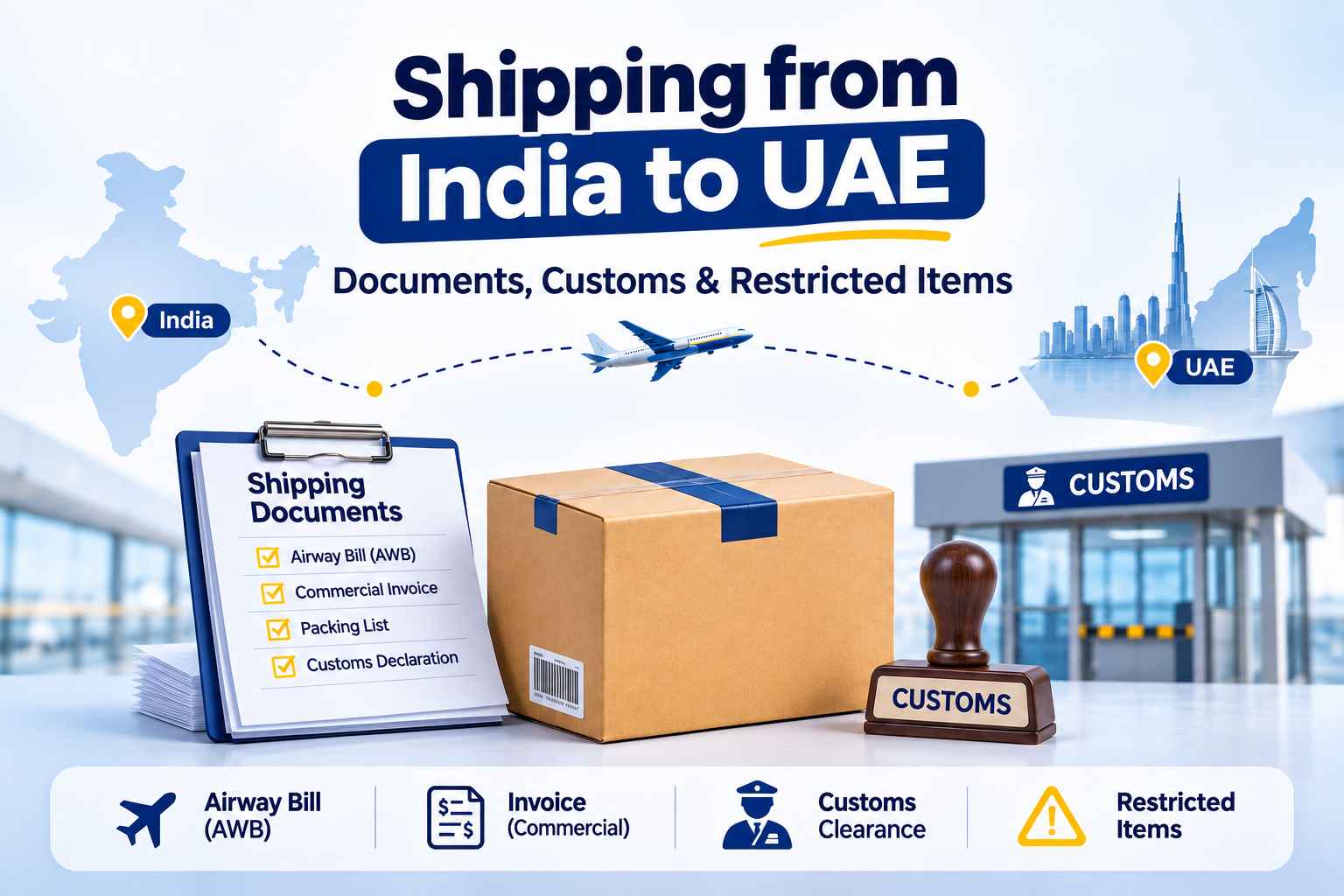
Sending a parcel from India to the United Arab Emirates (UAE) involves more than booking a pickup. The shipment must meet the carrier’s acceptance rules, carry accurate export information, travel through the selected service and complete UAE import clearance before delivery. Incomplete documents, vague product descriptions or incorrect values can lead to questions, delays or extra charges.
This guide explains the usual steps and documents for shipping parcels from India to Dubai and other UAE emirates. Requirements depend on the product, shipment purpose, carrier and destination. Confirm current requirements for your shipment with the carrier and relevant authority before booking.
For general background, see Shipmozo’s international shipping guide.
A typical parcel shipment passes through booking and pickup, export processing in India, international transport, import clearance in the UAE and local delivery. Handling and documents depend on whether the shipment is a document, personal effects, sample, ecommerce order or commercial consignment.
There is no single document list for every parcel. Requirements depend on the goods, shipment purpose, value, service and carrier. Before pickup, ask the authorised courier which documents it will file and which documents you must provide.
For courier exports, the authorised courier follows the applicable courier declaration process; the exact forms and supporting documents can vary. See the CBIC courier export regulations and forms, and confirm your shipment’s requirements with the courier.
Transit estimates can change because of customs checks, missing information, service availability or operational disruptions.
Some goods are prohibited; others may be imported only after approval from a competent authority. Rules can depend on the product’s ingredients, intended use, quantity, value and destination. Do not assume an item is eligible because it can be sold or used in India.
Categories that may need additional checks include medicines and medical products, food, cosmetics and personal care products, plants and animal products, batteries, radio equipment, alcohol, precious materials and branded goods. This is an illustrative checklist, not a complete list or a statement that every item in these categories is restricted.
Dubai Customs’ prohibited and restricted goods guidance describes the distinction between prohibited goods and restricted goods that require competent-authority approval. That page is Dubai-specific; for another emirate or a controlled product, check the relevant authority and obtain the carrier’s acceptance before dispatch.
Freight and destination-side duties, taxes, clearance or handling charges may be separate. The amount and payer depend on the shipment, applicable rules, carrier arrangement and agreed sale terms. Import VAT and any applicable customs duty or clearance charges may be separate. Before the customer orders, state clearly whether the sender or receiver is responsible for possible charges. Confirm what the carrier’s quote includes; do not assume it includes every destination charge. See the UAE Federal Tax Authority’s guidance on VAT for imports.
The right option depends on the item, urgency, packed size, destination and carrier eligibility. These are general descriptions; availability varies by carrier and lane.
Compare service terms, not only the displayed freight price. Confirm the carrier serves the full delivery address and accepts the product on that service.
Shipmozo’s international shipping information can help you explore the available workflow. Check the services and courier options shown for your account, shipment contents and destination before booking. Availability, documents, rates and transit estimates depend on the selected carrier and shipment.
Explore international shipping options
Requirements vary. A courier label or air waybill and an invoice or contents declaration are commonly involved. A packing list, permit, certificate or other supporting document may be needed depending on the item, shipment purpose, carrier and service. Confirm the exact list with the carrier.
No. Some goods are prohibited, while others require approval or special handling. Check the exact product with the carrier and relevant authority before booking.
Transit depends on origin, destination, selected service, carrier network, customs processing and documentation. Check the carrier’s current estimate for the specific shipment; customs checks or operational disruptions can extend it.
The sender or receiver may be responsible, depending on the agreed sale terms and carrier arrangement. Confirm what the quote includes and explain payment responsibility before dispatch.
Check acceptance and documents in advance, provide a precise contents description and supported value, use complete receiver details, and respond promptly to carrier or customs requests. These steps can reduce avoidable issues but cannot guarantee a delivery date.
Tracking is available on many international courier services, but detail and update frequency vary by carrier and service. Use the shipment reference provided at booking and contact the carrier if a status needs investigation.


Diveya Mehta is a marketing and content specialist with 3+ years of experience, currently working with Shipmozo. With 1 year of hands-on experience in logistics, she creates practical, insight-driven content focused on shipping, courier performance, and eCommerce growth.