How to Ship Perishable Products Safely: A Complete Guide to Packaging, Cold Chain & Carrier Requirements (2026)
Every year, businesses lose billions of dollars in spoiled shipments — not because of bad products, but because of bad shipping decisions.
Whether you're sending fresh seafood, pharmaceutical samples, gourmet food boxes, or floral arrangements, shipping perishable products is one of the most complex challenges in modern logistics. One wrong packaging choice, one missed temperature window, or one delayed transit can turn your product — and your customer relationship — into a loss.
What Are Perishable Products?
A perishable product is any item that degrades in quality, safety, or usability within a defined time frame — especially when exposed to heat, humidity, or mishandling.
Common Categories of Perishable Goods
Category
Examples
Typical Shelf Life
Fresh Food
Meat, dairy, produce, seafood
1–7 days
Frozen Food
Ice cream, frozen meals, fish
Weeks–Months (if kept frozen)
Pharmaceuticals
Vaccines, biologics, insulin
Varies (2°C–8°C required)
Floral
Cut flowers, live plants
3–10 days
Specialty Foods
Chocolates, cheese, baked goods
5–21 days
Biologics & Lab Samples
Blood samples, tissue cultures
Hours–Days
Standard shipping methods are built for durability — not sensitivity. Perishables need a completely different approach from the moment they're packed to the moment they're delivered.
Key Challenges in Shipping Perishable Products
Understanding what can go wrong is the first step to preventing it.
Top Challenges Businesses Face
Temperature spikes during loading, unloading, or tarmac waiting times
Longer-than-expected transit times due to weather, traffic, or carrier backlogs
Packaging failure — leaking gel packs, collapsed insulation, or crushed boxes
Last-mile delivery gaps where cold chain breaks down at the final leg
Carrier restrictions on dry ice or frozen goods on certain routes
Weekend and holiday delays leaving shipments sitting in warm warehouses
Knowing these risks upfront lets you build a shipping strategy that accounts for each one.
How too Choose the Right Packaging for Perishable Shipments
Packaging is your first and most important line of defense.
Coolants & Refrigerants — Which One Should You Use?
Coolant Type
Temperature Range
Best Used For
Key Consideration
Gel Ice Packs
0°C to 4°C
Fresh food, dairy, meat
Non-hazmat, easy to use
Dry Ice
-78.5°C
Frozen goods, biologics
Hazmat — requires special labeling
Liquid Nitrogen
-196°C
Lab samples, medical products
Specialized carriers only
Phase Change Materials (PCM)
Customizable
Pharma, precision temperature needs
Reusable, higher upfront cost
Moisture & Leak Control
Use absorbent gel pads under raw proteins or seafood
Line boxes with poly bags or waterproof barriers
Double-seal all liquids before placing inside insulated packaging
Include "This Side Up" arrows to prevent coolant shifting
Understanding Cold Chain Logistics
What Is the Cold Chain?
The cold chain is the unbroken sequence of temperature-controlled environments that a perishable product moves through, from production to the end consumer.
It includes:
Storage at origin (cold rooms, freezers)
Transport (refrigerated trucks, air freight)
Handling hubs (temperature-controlled warehouses)
Last-mile delivery (the most vulnerable stage)
Temperature Zones You Must Know
Zone
Temperature Range
Typical Products
Deep Frozen
Below -18°C
Ice cream, frozen seafood
Frozen
-18°C to -10°C
Frozen meals, meat
Refrigerated
2°C to 8°C
Vaccines, dairy, fresh produce
Ambient Cool
15°C to 25°C
Chocolate, wine, baked goods
Cold Chain Monitoring Tools
Single-use temperature loggers — placed inside shipment, scanned on arrival
Bluetooth & IoT sensors — real-time data throughout transit
QR code time-temperature indicators — visual color-change alerts
Cloud-based tracking platforms — full visibility dashboards for logistics teams
Best Carriers for Shipping Perishable Products
Not all carriers handle perishables equally. Here's a direct comparison:
Carrier
Service Name
Temp Control
Transit Speed
Best For
FedEx
Custom Critical
Yes (full)
Same day–2 days
High-value, pharma, urgent
UPS
Temperature True
Yes (full)
1–3 days
Food, biotech, e-commerce
USPS
Priority Mail Express
Limited
1–2 days
Small food packages, flowers
DHL
Express + Life Sciences
Yes (specialized)
1–3 days international
International perishables
OnTrac
Regional Cold
Partial
1–2 days (regional)
West Coast US businesses
Cryoport
Specialized
Full cryogenic
Varies
Pharma, biologics, clinical trials
Tips for Choosing the Right Carrier
Always verify the carrier's temperature guarantee policy in writing
Ask about cold storage at hubs if your shipment has connecting legs
Confirm whether dry ice is accepted on the specific route
Choose carriers with real-time tracking so you can intervene if delays occur
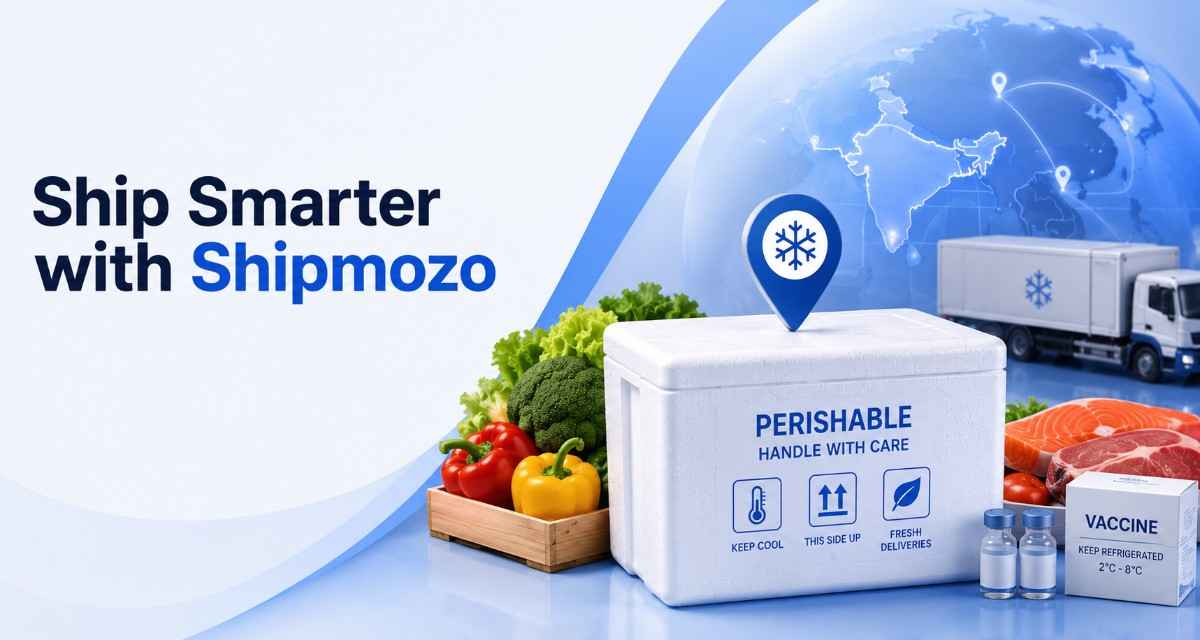
Ship Smarter with Shipmozo
Ship Smarter with Shipmozo
Finding the right carrier for perishable products can feel overwhelming—especially when every delay costs you inventory, money, and customer trust. That's where Shipmozocomes in.
As one of India's leading shipping aggregator platforms, Shipmozo lets you compare rates across multiple trusted carriers in real time, book the fastest available service for your perishable shipment, and track every order from pickup to delivery—all from a single dashboard.
Whether you're shipping fresh food, pharmaceuticals, or specialty products, Shipmozo gives growing businesses the tools and carrier network they need to ship perishables with confidence, without the complexity.
Regulations & Compliance for Perishable Shipping
FDA & FSMA (Food Safety Modernization Act)
Applies to all food businesses shipping in or to the US
Requires written food safety plans for temperature-sensitive shipments
Mandates sanitary transportation practices for shippers and carriers
IATA Regulations (Air Freight)
Perishables must be declared and packed per IATA Perishable Cargo Regulations (PCR)
Specific rules on packaging integrity, labeling, and acceptance timelines
Dry ice is classified as UN 1845—a hazardous material requiring special documentation
Dry Ice Shipping Rules
Maximum 2.5 kg per package on passenger aircraft
Must be labeled "Dry Ice," "Carbon Dioxide Solid," UN 1845
Packaging must allow CO₂ gas to vent to prevent pressure buildup
International Customs
Many countries require phytosanitary certificates for plant and food products
Declare accurate contents—mislabeled perishables are seized and destroyed
Build extra transit buffer for international routes (customs can add 24–72 hrs)
Cost Breakdown — How Much Does It Cost to Ship Perishables?
Factors That Affect the Cost
Weight & dimensions of the insulated package (dimensional weight applies)
Distance & zones — more zones = higher cost
Speed required — overnight is significantly more expensive than 2-day
Coolant type — dry ice shipments may incur hazmat surcharges
Carrier surcharges — fuel, residential delivery, remote area fees
Average Cost Ranges (US Domestic)
Shipment Type
Estimated Cost Range
Small refrigerated box (overnight)
$25 – $60
Medium frozen shipment (2-day)
$40 – $90
Large pharma shipment (same-day)
$150 – $500+
International refrigerated cargo
$200 – $1,000+
How to Reduce Shipping Costs Without Compromising Quality
Negotiate volume rates with your primary carrier
Pre-chill packaging to reduce coolant quantity needed
Ship Monday–Wednesday to avoid weekend warehouse delays
Use regional carriers for shorter routes where available
Batch orders to consolidate shipments
Best Practices for Shipping Perishable Products
Follow these non-negotiable rules for every shipment:
Ship early in the week—Tuesday or Wednesday is ideal to avoid weekend delays
Pre-chill your packaging at least 12 hours before packing
Use the shortest viable transit time — never sacrifice speed for small savings
Label clearly—"Perishable," "Keep Refrigerated," "Do Not Freeze," and "This Side Up."
Test your packaging before going live—run a dummy shipment in peak summer heat
Include handling instructions inside the box for the recipient
Notify recipients with tracking info and an estimated delivery window
Monitor shipments in real-time and have a contingency plan for delays
Common Mistakes to Avoid
These errors are more common than you think—and they're avoidable:
Using too little coolant — calculate based on transit time + 20% buffer
Skipping pre-chilling — room-temperature packaging burns through ice packs fast
Choosing the cheapest carrier without checking their perishable handling record
Ignoring weekend cutoffs—a Friday shipment can sit until Monday
Poor or missing labels — handlers won't know to prioritize your package
Not testing packaging in real weather conditions before scaling
Skipping temperature monitoring — you won't know if something went wrong
Conclusion
Shipping perishable products successfully isn't just about picking a carrier and hoping for the best. It's a system—packaging, temperature control, carrier selection, compliance, labeling, and real-time monitoring all working together.
The businesses that master perishable shipping build stronger customer trust, reduce losses, and scale with confidence. The ones that cut corners pay for it in refunds, spoiled inventory, and lost customers.
Key takeaways:
Choose packaging and coolants matched to your exact transit time and product
Always ship Monday–Wednesday and use the fastest viable service
Know the regulations for your product type and destination
Monitor shipments in real-time and have a contingency plan ready
Test before you scale
FAQs — Most Asked Questions About Shipping Perishable Products
Q1. Can you ship perishable products via USPS?
Yes, USPS allows perishable shipments via Priority Mail Express (1–2 days). However, USPS does not offer active temperature control, so proper insulated packaging and coolants are entirely your responsibility. It works best for short-distance, quick-transit shipments.
Q2. How long can perishables stay cold during shipping?
It depends on the packaging and coolant used. Gel packs typically maintain 0°C–4°C for 24–48 hours. Dry ice can maintain frozen temperatures for 48–96 hours. High-end vacuum-insulated panels can extend this to 5+ days.
Q3. Do I need special permits to ship food products?
For domestic US shipments, most food products don't require special permits, but you must comply with FDA FSMA regulations. For international shipments, you may need a phytosanitary certificate, health certificate, or import permit depending on the destination country and product type.
Q4. What happens if a perishable shipment is delayed?
First, contact the carrier immediately with your tracking number. Some carriers offer service guarantees with refunds on delayed shipments. If the product is spoiled, document everything with photos for an insurance claim. Always build a delay buffer into your coolant calculations.
Q5. Is dry ice safe for shipping food?
Yes, dry ice is safe and commonly used for frozen food shipping. However, it must never come into direct contact with food, as it can cause freezer burn. Always wrap dry ice in paper or place it in a separate compartment. It's also a regulated hazardous material for air freight.
Q6. What's the best way to ship fresh seafood?
Use an EPS foam cooler with gel ice packs or dry ice depending on transit time. Line the box with absorbent pads to contain moisture. Ship Monday–Wednesday via overnight or 2-day service. Declare as perishable and label clearly.
Q7. How do I calculate how much dry ice I need?
A general rule: use 5–10 lbs of dry ice per 24 hours of transit for a standard cooler. Add 20–30% extra as a buffer for unexpected delays. Always check carrier weight limits — most cap dry ice at 2.5 kg for air shipments.
Kuldeep Karki is a Digital Marketing Manager at Shipmozo, specializing in performance marketing, SEO, and growth strategy. With over 6+ years of experience in digital marketing, he has worked extensively on scaling B2B and eCommerce brands through data-driven campaigns across Meta Ads and Google Ads.


.jpeg)







.webp)