
eCommerce Shipping Solution

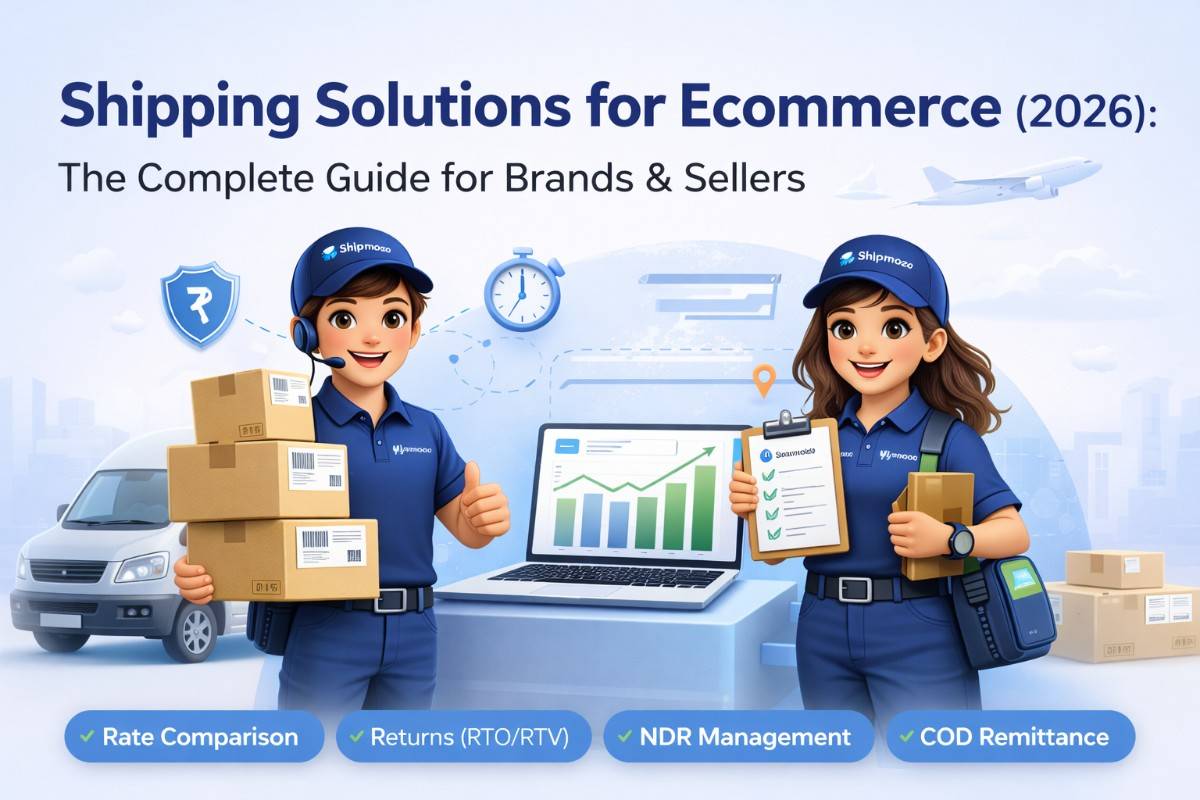
Shipping Solutions for Ecommerce (2026): The Complete Guide for Brands & Sellers

Shipping is no longer just a “dispatch step.” For modern D2C brands, marketplaces sellers, and B2B ecommerce, shipping solutions for ecommerce directly affect profit margins, customer trust, delivery success rates, and repeat orders.

If your orders are increasing but your operations still rely on spreadsheets, manual label creation, and “one courier for everything,” you’ll eventually face problems like:

  • Unpredictable delivery timelines
  • High RTO/returns and customer complaints
  • Cost leakage via volumetric charges and surcharges
  • Delayed COD settlements and messy reconciliation
  • Low visibility once the parcel leaves the warehouse

This guide explains what ecommerce shipping solutions actually include, how to choose the right setup, and how to optimize shipping for speed, cost, and reliability—without creating operational chaos.

What Are Shipping Solutions for eCommerce?

Shipping solutions for ecommerce are tools, systems, and services that help an online business manage end-to-end delivery operations—from order creation to successful delivery.

A complete ecommerce shipping solution typically covers:

  • Courier selection + shipping rate comparison
  • Label generation + manifesting
  • Pickup scheduling and dispatch automation
  • Real-time shipment tracking + customer notifications
  • Returns (RTO/RTV) and NDR management workflows
  • COD remittance tracking and reconciliation
  • Analytics
  • Integrations with stores, marketplaces, ERP/WMS

Why Ecommerce Businesses Need Shipping Solutions 

A courier company delivers parcels. A shipping solution helps you control the whole shipping layer.

Here’s what changes when you move from “courier-only” to “shipping management system” thinking:

1) Cost control becomes systematic

Instead of paying whatever you’re charged, you start managing:

  • Courier-wise lane performance
  • Zone and weight-wise pricing
  • Volumetric surprises
  • Failed delivery cost (RTO and reattempts)

2) Delivery success improves

With proper NDR workflows, better courier allocation, and proactive customer communication, you reduce:

  • Address issues
  • COD refusal
  • “Customer not available” delivery fails

3) Customer experience becomes consistent

Customers don’t judge you by your warehouse speed—they judge you by:

  • Tracking clarity
  • Delivery predictability
  • Fast resolution on delays/returns

4) You unlock growth without ops burnout

When shipping is automated, your team spends less time “chasing parcels” and more time scaling orders.

Core Components of Ecommerce Shipping Solutions

If you’re evaluating options, these are the features that matter most.

1) Courier integrations + multi-carrier access

A strong solution connects you to multiple courier partners and lets you allocate shipments based on:

  • Pincode performance
  • Pricing
  • Delivery speed
  • COD acceptance and success

This approach is often called a courier aggregator model.

2) Shipping rate comparison 

Rate shopping means you can compare shipping costs in real time by:

  • Zone
  • Weight slab
  • COD vs prepaid
  • Service type 

This is one of the fastest ways to reduce shipping cost without cutting service quality.

3) Automated label generation + bulk processing

Instead of generating shipping labels one-by-one, you can:

  • Auto-create labels as soon as an order is paid/confirmed
  • Bulk print labels and invoices
  • Auto-generate manifests

This is essential once you cross even a modest daily volume.

4) Order tracking + branded tracking page

Your tracking experience matters more than most sellers realize.

A branded tracking page helps:

  • Reduce “Where is my order?” tickets
  • Improve trust and post-purchase experience
  • Keep customers engaged on your brand instead of a courier’s generic page

5) Customer notifications (WhatsApp, SMS, Email)

Proactive alerts reduce failed deliveries and support tickets:

  • Order shipped notifications
  • Out for delivery alerts
  • Delivery attempt alerts
  • Delay/exception updates

If you ship COD, notifications become even more important for delivery confirmation.

6) NDR management 

NDR is one of the biggest levers to reduce RTO.

A good shipping solution enables:

  • Fast NDR visibility
  • Automated reattempt selection
  • Customer confirmation workflows
  • Escalation and resolution tracking

7) Returns + RTO handling

Returns are a cost center unless managed properly.

Ecommerce shipping solutions should support:

  • Auto RTO initiation
  • Return label generation
  • Returns pickup and tracking
  • Reason capture and analytics

8) COD remittance + reconciliation

For COD-heavy businesses, cashflow matters.

You need:

  • Clear COD dashboard
  • Remittance timelines
  • Settlement reports
  • Easy reconciliation against orders

9) Analytics + performance reporting

The best systems make shipping measurable:

  • Courier-wise RTO rates
  • Delivery TAT by lane
  • Cost per shipment
  • Exception reasons (lost/damaged/delayed)
  • NDR resolution success

Types of Ecommerce Shipping Solutions 

Option A: Direct courier contracts 

Best for: very low volume or fixed-lane shipping
Challenges: limited flexibility, manual ops, harder optimization

Option B: Courier aggregator / shipping platform

Best for: D2C brands and sellers who want rate comparison + automation
Advantages: multi-courier access, central dashboard, faster scaling

Option C: 3PL / fulfillment partner

Best for: brands that want warehousing + packing + shipping handled
Trade-off: less direct control, depends on SLAs and location coverage

Option D: Custom shipping API + in-house ops

Best for: large enterprises with engineering + ops maturity
Trade-off: high build and maintenance cost

How to Choose the Best Shipping Solution for Your Ecommerce Business

Use this checklist to evaluate options logically .

1) Match to your order profile

  • Are you high COD or mostly prepaid?
    Do you ship light parcels or bulky items?
  • Do you ship pan-India or only specific zones?
  • Do you need same-day/next-day service?

2) Validate pincode performance 

Don’t choose based on brand reputation alone.
Test:

  • Your top 20–50 customer pincodes
  • COD delivery success
  • NDR frequency and resolution time
  • Actual delivery days

3) Confirm pricing transparency

Ask clearly about:

  • Volumetric weight rules
  • Fuel surcharge, remote area surcharge
  • Return and reattempt charges
  • COD fee and remittance deductions

4) Check reliability during exceptions

Most shipments are fine. The real difference is:

  • How fast exceptions are flagged
  • How quickly stuck shipments move again
  • Whether accountability exists

5) Confirm integrations

A shipping solution should integrate with your storefront and tools.
Common stacks include:

  • Shopify / WooCommerce stores
  • OMS/ERP
  • WMS
  • Customer support tools

6) Review returns and NDR tooling

If the platform is weak on returns + NDR, you’ll feel it within weeks.

Best Practices to Optimize Ecommerce Shipping 

1) Don’t use one courier for every order

Courier performance changes by lane. Use lane-based allocation:

  • Courier A for metro-to-metro
    Courier B for Tier-2 delivery success
  • Courier C for COD-heavy pincodes

2) Fix the top RTO causes at source

Most RTO is predictable. Common causes:

  • Incomplete address
  • Customer unavailable
  • COD refusal
  • Wrong phone number

Practical fixes:

  • Address validation at checkout
  • WhatsApp/SMS confirmation for COD
  • Delivery preference capture (time slot, landmark)

3) Use branded tracking + proactive updates

A clean post-purchase flow reduces cancellations and tickets.
Send:

  • “Shipped” + ETA
  • “Out for delivery”
  • “Delivery attempted” + action option

4) Tighten packaging and reduce volumetric risk

Volumetric weight is often a silent cost leak.
Do:

  • Right-size packaging
  • Standardize carton sizes
  • Keep an internal dimensional weight chart

5) Automate shipping rules

Good shipping software supports rules like:

  • “If COD + zone D → courier X”
  • “If >2kg → surface mode”
  • “If high-value SKU → insured courier”

Automation removes decision fatigue and prevents costly errors.

6) Create a weekly shipping performance review

Every week, track:

  • RTO% and NDR% by courier
  • Cost per shipment trend
  • Top delay lanes
  • Top complaint categories

Small weekly improvements beat “big fixes” once a quarter.

Setting Up Shipping Solutions for Ecommerce

Step 1: Map your shipping lanes

List your top:

  • Origin pickup locations
  • Delivery states/cities
  • COD-heavy areas

Step 2: Define shipping goals

Examples:

  • Reduce RTO by 15%
  • Improve delivery TAT in top 5 states
  • Reduce shipping cost per order by ₹X
  • Improve COD settlement visibility

Step 3: Choose the model 

Pick based on volume + team capacity.

Step 4: Integrate store + sync orders

Connect your store and ensure:

  • Order statuses sync correctly
  • SKU weights and dimensions are accurate
  • Customer contact data is captured

Step 5: Configure courier allocation rules

Start simple, then optimize.

Step 6: Set up tracking + notifications

Keep it minimal and helpful .

Step 7: Build NDR + returns SOPs

  • How quickly NDR is actioned
  • Which cases get reattempts
  • When to call customers 

Conclusion

Choosing the right shipping solutions for ecommerce isn’t about finding a single “cheap courier”—it’s about building a reliable system that controls cost, improves delivery success, and scales without breaking your operations. When you add the right mix of courier integration, shipping rates comparison, shipping automation, branded tracking page, NDR management, returns management, and COD remittance visibility, shipping becomes a growth lever—not a daily firefight. Start with your order profile and top pincodes, insist on pricing transparency, and optimize weekly using performance analytics. With a structured ecommerce shipping solution (whether a courier aggregator platform or a full shipping management system), you can reduce RTO, improve customer trust, and ship confidently—across India and internationally.


Get in Touch with Our Team -

Please contact us in case of any queries / suggestions.

Corporate Office
Office number 245-246,Tower B2, Spaze-I-Tech Park, Gurugram – 122018, Haryana
CUSTOMER SUPPORT -
+91 7375000072
contact@shipmozo.com

🏷️ Get our Discounted Prices!

Thank you! Your submission has been received!
Oops! Something went wrong while submitting the form.
whatsapp