
eCommerce Shipping Solution

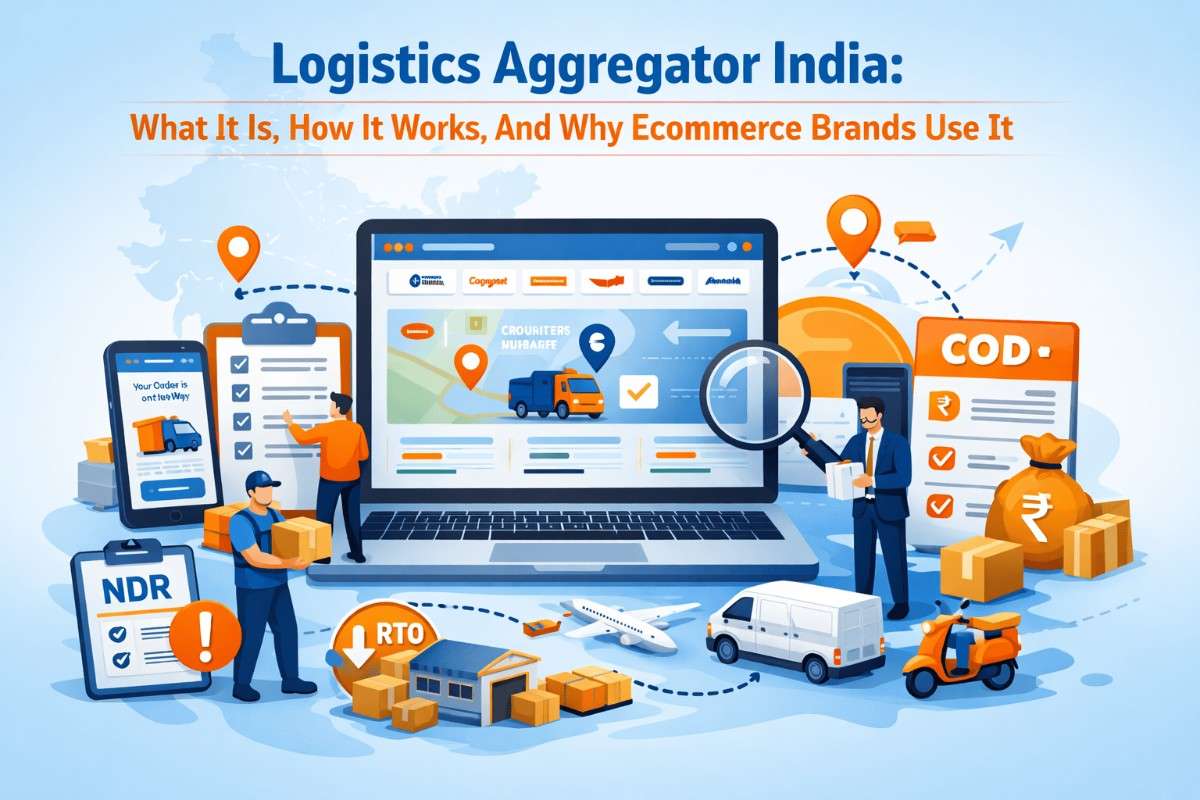
Logistics Aggregator India: What It Is, How It Works, and Why Ecommerce Brands Use It

If you ship orders daily in India, you’ve probably felt the “ops tax” of logistics: multiple courier dashboards, inconsistent tracking updates, daily rate comparisons, NDR follow-ups, COD reconciliation, and constant escalation loops. That’s exactly where a logistics aggregator in India becomes relevant—especially for ecommerce teams that want scale without multiplying headcount.

A logistics  aggregator is essentially a platform that consolidates services from multiple carriers into one interface—so businesses can access shipping options, compare rates, generate labels, and track shipments without managing separate contracts and workflows for each courier.

This guide explains the concept in a practical way while also covering the feature set you should expect from a modern platform —including branded shipment tracking, NDR management, COD remittance, and RTO reduction.

What is a logistics aggregator in India?

A logistics aggregator connects shippers (brands/sellers) with multiple logistics providers and brings key shipping actions into one system—rate selection, label printing, shipment tracking, and exception handling.

In ecommerce, many people also use the term courier aggregator India or shipping aggregator platform to describe the same model: one dashboard → many courier partners, with standardized workflows.

Why the term matters now

India’s ecommerce industry is growing quickly, increasing shipment volumes and operational complexity for sellers and brands. IBEF estimates India’s ecommerce market at about US$125B in 2024, projected to reach US$345B by 2030.
As shipping volumes rise, so does the need for tools that reduce manual ops and improve delivery outcomes—especially on COD-heavy order mixes.

How a logistics aggregator works

Here’s the typical lifecycle when using a multi-carrier shipping software approach:

  1. Integrate orders
    Connect Shopify/WooCommerce/marketplace or upload orders via CSV/API.
  2. Compare courier options
    The platform surfaces rate/ETA/serviceability options from different carriers .
  3. Book shipment + print labels
    Labels, manifests, and pickup requests happen from one place.
  4. Track shipments centrally
    Tracking data is normalized into a single view .
  5. Handle exceptions
    Failed attempts, address issues, customer not available—these generate exceptions that need action.
  6. Close the loop (COD + analytics)
    COD remittance status and delivery performance are tracked for cashflow and optimization.

This “one system of record” is the real value—not just cheaper rates.

Logistics aggregator India vs. direct courier contracts: what changes?

If you manage couriers directly:

  • Multiple courier logins + rate cards
  • More manual decision-making per shipment
  • Higher operational overhead for tracking, NDR, escalations
  • COD reconciliation often becomes spreadsheet-heavy

If you use a shipping aggregator platform:

  • Single dashboard + standardized shipping workflows
  • Faster dispatch
  • Better visibility across courier performance and exceptions
  • More consistent buyer updates via unified tracking experience

For high-volume teams, the difference is not just convenience—it’s predictable operations.

Key benefits ecommerce teams get from ecommerce logistics solutions

1) Higher delivery success through better exception handling

In India, the operational cost of “failed delivery attempts” is huge. Most failures show up as NDR (Non-Delivery Report) events, which are generated when delivery attempts fail and require seller action to reattempt or update details.

A good logistics aggregator turns NDR from a chaotic backlog into a structured workflow .

2) Faster dispatch with rule-based courier selection

When order volumes increase, manually choosing couriers becomes a bottleneck. Aggregators can support automation .

3) Consistent tracking and buyer communication

Customers don’t care which courier you used—they care about a clear status. A single tracking layer enables branded shipment tracking and more consistent updates.

4) Improved cashflow visibility for COD-heavy brands

COD is still significant in many categories, and tracking settlements is painful without tooling. A platform that gives COD remittance visibility reduces reconciliation time and follow-ups.

Features to look for in a logistics aggregator in India

If your goal is not just “shipping” but “better delivery outcomes,” prioritize features that affect success rate, RTO, and support load.

1) Multi-courier booking + centralized tracking

This is baseline: multiple carriers, one dashboard.
But verify the quality: does it show scan-level events cleanly? Does it flag stuck shipments?

2) Branded shipment tracking

A strong branded shipment tracking page is not just cosmetic. It reduces:

  • “Where is my order?” tickets
  • COD refusal risk
  • Anxiety during delays

Look for:

  • Your brand identity on tracking page
  • Proactive notifications (WhatsApp/SMS/email depending on your stack)
  • Clear exception messaging (delay, reattempt, address issues)

3) NDR management

NDR is one of the most expensive parts of Indian ecommerce ops. NDR events occur when delivery fails due to issues like customer unavailable, incorrect address, or refusal—requiring action to recover the delivery.

Good NDR management includes:

  • Structured reason codes and queues
  • Timers/SLAs for action
  • Reattempt workflows
  • Notes + customer communication history
  • Escalation support when courier coordination is needed

4) COD remittance visibility

Shipmozo’s site, for example, highlights COD remittance tracking in a single dashboard and shipment-level visibility to support reconciliation and cashflow planning.
Regardless of provider, you want:

  • Settlement status per shipment
  • Deduction/exception visibility
  • Filters by courier/date/status
  • Exportable reports for finance ops

5) Analytics

At scale, you need “decision-grade” reporting:

  • Courier success rate by lane/pincode
  • Delay hotspots
  • RTO reasons and trends
  • COD cycle time

This is how you systematically reduce RTO and improve margins.

How a logistics aggregator helps reduce RTO

RTO (Return to Origin) typically spikes due to:

  • Poor address quality
  • COD refusal / fake orders
  • Delayed delivery attempts
  • Weak NDR follow-up

While RTO is multi-factor, a good system reduces it through:

  1. Early exception visibility
    Faster detection of stuck shipments = faster interventions.
  2. NDR workflows
    Structured follow-up increases delivery recovery. (This is why NDR management is a key capability.)
  3. Courier allocation intelligence
    Using lane-level performance to choose the best courier improves first-attempt success.
  4. Communication clarity
    Better tracking and proactive updates reduce refusal and anxiety-driven cancellations.

How to choose the right logistics aggregator in India

Use this checklist to evaluate any courier aggregator India option.

A) Coverage + serviceability

  • Your top 20 pincodes: check multiple couriers’ performance and pickup feasibility
  • COD support where needed
  • Handling of heavy/volumetric shipments

B) Feature fit

  • If you lose money on RTO → prioritize NDR management + reduce RTO workflows
  • If finance struggles → prioritize COD remittance visibility + exports
  • If support tickets are high → prioritize branded shipment tracking + notifications
  • If dispatch is slow → prioritize automation/rules

C) Data + reporting quality

Ask for sample reports. If you can’t easily answer:

  • “Which courier is best for Zone X COD shipments under 1kg?”
    you’re still operating blind.

D) Support + accountability

At scale, support quality becomes a feature. Look for:

  • Dedicated escalation paths
  • Clear ownership for courier coordination
  • Defined turnaround times

E) Integration and reliability

  • Shopify/WooCommerce/marketplace integration
  • API availability
  • Uptime and operational stability

Implementation plan

If you’re adopting a shipping aggregator platform, roll it out in phases:

Phase 1: Pilot

  • Start with 10–20% order volume
  • Focus on 1–2 zones or a single brand/store
  • Validate: label flow, pickup reliability, tracking accuracy

Phase 2: Rules + exception workflows

  • Define courier selection rules
  • Set NDR action SOPs
  • Set reporting cadence

Phase 3: Full adoption + optimization

  • Compare couriers by lane and category
  • Improve address capture and pre-dispatch verification
  • Optimize COD reconciliation cycle

Where Shipmozo fits

If Shipmozo is your platform choice, position it in the blog as an example of what to look for:

  • Central dashboard for shipping + COD remittance visibility.
  • Focus areas you’ve already been building content/graphics around: branded tracking, NDR workflows, RTO control, dedicated account support.

The key is to frame Shipmozo as: “here’s how to evaluate; here’s how Shipmozo aligns.”

Conclusion: the real value is operational control

A logistics aggregator India solution isn’t just a way to ship with multiple couriers—it’s a way to standardize dispatch, improve delivery success, lower exception chaos, and get predictable COD visibility. As your ecommerce volume grows, the winning move is to invest in multi-carrier shipping software that supports your full delivery lifecycle: courier selection → tracking → NDR recovery → COD reconciliation → performance optimization.


Get in Touch with Our Team -

Please contact us in case of any queries / suggestions.

Corporate Office
Office number 245-246,Tower B2, Spaze-I-Tech Park, Gurugram – 122018, Haryana
CUSTOMER SUPPORT -
+91 7375000072
contact@shipmozo.com

🏷️ Get our Discounted Prices!

Thank you! Your submission has been received!
Oops! Something went wrong while submitting the form.
whatsapp