
eCommerce Shipping Solution

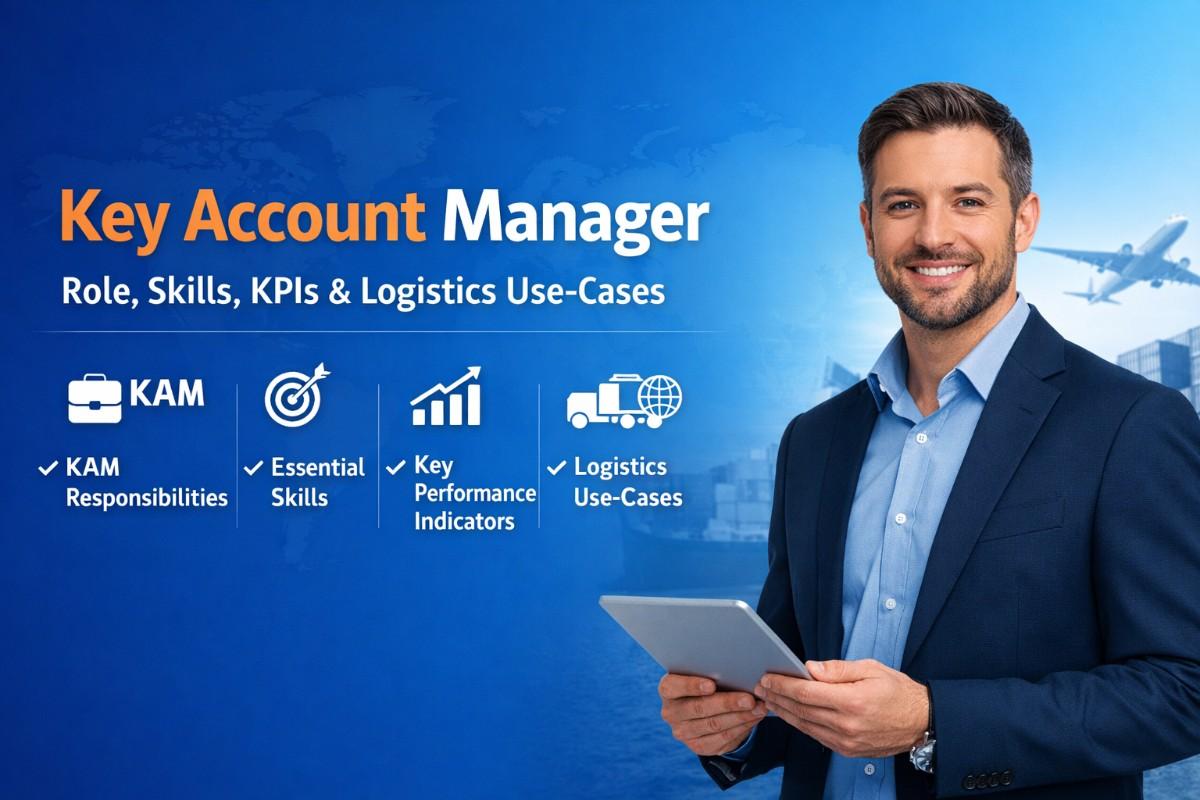
Key Account Manager: Role, Value & Best Practices

In simple terms, a Key Account Manager ensures two outcomes:

  1. The customer consistently achieves results
  2. The business earns and grows that relationship

As markets get more competitive and customer expectations get sharper, Key Account Management is no longer “just relationship management.” It’s a structured, data-driven, cross-functional role that blends customer success, operations alignment, and commercial strategy.

What Is a Key Account Manager?

A Key Account Manager is a senior account owner who manages a small portfolio of high-value customers and acts as the single point of leadership across:

  • Commercial goals
  • Operational success
  • Strategic partnership

Unlike standard account handling, Key Account Management focuses on:

  • Fewer accounts
  • Higher impact
  • Deeper engagement
  • Longer-term relationship value

Key Account Manager vs Account Manager vs Sales: What’s the difference?

Key Account Manager vs Account Manager

An Account Manager often supports many accounts with reactive servicing and periodic upsells.
A Key Account Manager supports fewer accounts, but goes deeper—building account plans, aligning stakeholders, and driving measurable outcomes.

Key Account Manager vs Sales Manager

Sales teams focus on acquiring customers and closing deals.
A Key Account Manager focuses on retaining and expanding key customers by improving value delivery and deepening partnership.

Key Account Manager vs Customer Success Manager (CSM)

A CSM typically focuses on product adoption and retention .
A Key Account Manager covers adoption plus revenue expansion, stakeholder management, and broader commercial strategy—especially in enterprise and logistics.

What Does a Key Account Manager Do Daily?

A high-performing Key Account Manager is responsible for four ongoing cycles:

1) Account planning

  • Identify the customer’s business goals and constraints
  • Map stakeholders and decision-makers
  • Build an account plan
  • Define success metrics and review cadence

2) Performance management

  • Monitor service KPIs and SLA performance
  • Track issues, exceptions, escalations, and root causes
  • Coordinate internal teams
  • Drive process improvements to reduce recurring friction

3) Relationship leadership

  • Run business reviews (weekly/monthly/QBR)
  • Align expectations and priorities
  • Communicate progress, risks, and actions clearly
  • Maintain executive visibility on both sides

4) Growth and value expansion

  • Identify expansion opportunities
  • Manage pricing/value conversations
  • Build pilots and proofs of value
  • Secure renewals, longer contracts, and strategic commitments

Why Key Account Management Matters

A strong Key Account Manager improves outcomes that directly impact revenue and stability:

1) Higher retention and predictable renewals

Key accounts usually have high switching costs. But they still churn if they feel ignored, misunderstood, or operationally stuck. A Key Account Manager prevents silent churn by keeping value visible and issues controlled.

2) Faster issue resolution and fewer escalations

Escalations often happen when ownership is unclear. A KAM creates an escalation structure and ensures follow-through.

3) More expansion revenue with lower acquisition cost

Growing existing key accounts is often more efficient than acquiring new ones—because trust is already built.

4) Stronger customer advocacy and referrals

Satisfied enterprise customers become references, case studies, and partnership wins.

Key Account Manager in Logistics: Why the Role Becomes Critical

In logistics and supply chains, customer expectations are ruthless: reliability, cost control, visibility, and exception handling. A small failure can stop production lines, break customer promises, or trigger major penalty costs.

That’s why a Key Account Manager in logistics is often expected to understand and improve the customer’s logistics operations—routes, costs, lead times, exception patterns, and network design.

In practical terms, a logistics KAM helps customers:

  • Identify and solve supply chain/logistics problems
  • Advise on planning and transport management decisions
  • Support distribution network design and technology implementation

This is especially important in complex industries like automotive, where supply chain interconnectivity and disruption risk are high.

The Core Responsibilities of a Logistics Key Account Manager

If you’re writing a job description—or evaluating a logistics provider—these are the responsibilities that separate average from excellent.

1) SLA ownership and operational performance

  • On-time pickup and delivery performance
  • Damage/loss rate control
  • Exception reduction and faster resolution
  • Continuous improvement initiatives

2) Exception handling + escalation control

A mature KAM setup ensures:

  • Centralized issue visibility
  • Escalation workflow and response timelines
  • Courier/partner coordination
  • Clear ownership and accountability

3) Cost optimization and value engineering

Not just “cheaper,” but lower total cost to serve, including:

  • Reducing failure costs
  • Improving lane selection and network performance
  • Reducing repeat issues through root-cause actions

4) Change management and growth planning

  • Seasonal peak planning
  • New region/service rollout
  • SOP updates and operational readiness checks

Skills Every Key Account Manager Needs

A Key Account Manager needs more than communication skills. At enterprise level, KAM is a leadership role.

Must-have KAM skills

  • Stakeholder management: handle multiple decision-makers and teams
  • Business acumen: understand the customer’s margins, operations, and priorities
  • Data fluency: read dashboards, identify trends, explain them clearly
  • Problem-solving: root-cause thinking, structured action plans
  • Negotiation: pricing/value alignment without damaging trust
  • Project management: timelines, owners, follow-ups, closure discipline
  • Cross-functional leadership: influence internal ops/tech/finance without direct authority

Key Account Manager KPIs

A Key Account Manager should be measured on outcomes—not activity.

Commercial KPIs

  • Retention / renewal rate
  • Expansion revenue
  • Account profitability / contribution margin
  • Forecast accuracy for renewals and growth

Service + Experience KPIs

  • SLA achievement
  • Exception rate and resolution time
  • Customer satisfaction (CSAT) / NPS
  • Escalation volume trend

Operational KPIs

  • Claims rate
  • Return/reattempt rates
  • Billing accuracy and dispute turnaround time

The KAM Operating System

A Key Account Manager becomes powerful when the role runs on a system:

1) Stakeholder map + escalation matrix

Who decides? Who influences? Who executes? Who to escalate to—on both sides?

2) QBRs

A real QBR is not a presentation. It’s:

  • KPI story
  • Risk register
  • Improvement roadmap
  • Expansion opportunities

3) Voice of Customer (VoC) loop

Collect structured feedback, convert into changes, and report back.

4) Issue management discipline

Every recurring issue should have:

  • Root cause
  • Fix plan
  • Prevention mechanism
  • Owner + timeline

Common Mistakes in Key Account Management

Even experienced Key Account Managers can fall into traps:

  1. Being reactive instead of proactive
  2. Focusing on relationship but ignoring KPIs
  3. Not aligning internal teams early
  4. No documented account plan
  5. Not documenting decisions and SLAs

FAQs: Key Account Manager

What is the role of a Key Account Manager?

A Key Account Manager manages high-value customers to ensure retention, growth, and long-term partnership through performance management, stakeholder alignment, and strategic planning.

What skills are required for Key Account Management?

Stakeholder management, communication, data analysis, problem-solving, negotiation, project management, and cross-functional leadership.

Why is a Key Account Manager important in logistics?

Because logistics customers need predictable performance, visibility, and fast resolution of exceptions. A logistics KAM improves routes, costs, timing, and operational execution across the customer’s supply chain.

Conclusion: A Key Account Manager Protects Revenue by Protecting Outcomes

A Key Account Manager is a strategic role that sits at the intersection of customer outcomes, operational performance, and long-term revenue growth. In logistics and supply chain environments—where downtime, delays, and exceptions are costly—Key Account Management becomes even more valuable because it brings structure, accountability, and improvement discipline to complex operations.


Get in Touch with Our Team -

Please contact us in case of any queries / suggestions.

Corporate Office
Office number 245-246,Tower B2, Spaze-I-Tech Park, Gurugram – 122018, Haryana
CUSTOMER SUPPORT -
+91 7375000072
contact@shipmozo.com

🏷️ Get our Discounted Prices!

Thank you! Your submission has been received!
Oops! Something went wrong while submitting the form.
whatsapp